
TL;DR
Your internal clock resets with light, especially blue light. By timing your sunlight exposure to match your travel direction—seeking morning light eastward, evening light westward—you can accelerate jet lag recovery by up to 50%. Proper planning before, during, and after travel makes this strategy even more powerful.
Jet lag isn’t just about feeling sleepy or wired. It’s a mismatch between your internal clock and the local time at your destination. Light is the key to fixing this—if you use it right. Learning when to soak up sunlight or shield your eyes can cut your jet lag in half.
Most travelers treat jet lag as a random annoyance, but science shows it’s a problem of timing. Get it right, and your body can catch up with the new time zone faster—sometimes in just a day or two, instead of a week. Here’s how to harness the power of light for a smoother trip.
Timing light exposure relative to your internal clock is the most powerful tool against jet lag.
Seek morning light when traveling east, and evening light when traveling west, starting a few days before departure.
Estimate your biological night—about 2 hours before waking—to optimize light timing.
Pre-travel schedule shifts and in-flight light management significantly reduce recovery time.
Avoid late-night screens and mistimed melatonin to prevent sabotaging your adjustment efforts.
How Light Controls Your Body Clock — And How to Use It
Light is the strongest ‘zeitgeber’—a fancy word for ‘time giver.’ It signals your brain’s master clock, the SCN, to keep your body on a schedule. The catch? When you get that light determines if your clock shifts forward or backward.
If you get light before your temperature minimum (roughly 2 hours before your usual wake time), it pushes your clock later. After that point, it advances your clock—making you feel sleepy earlier.
Understanding this timing is crucial because it allows you to intentionally shift your internal clock in the desired direction. For example, if you want to delay your body’s rhythm to match a westward trip, exposing yourself to light before your temperature minimum can help. Conversely, seeking light after that window can help you advance your clock for eastward travel. This precise timing can mean the difference between a quick adjustment and lingering jet lag, as it leverages your body’s natural phase response to light.
blue light therapy lamp for jet lag
As an affiliate, we earn on qualifying purchases.
As an affiliate, we earn on qualifying purchases.
Your Body’s ‘Night’ Is About 2 Hours Before Waking — Use It
To leverage light properly, you need to know when your ‘biological night’ is. Typically, this is about 2 hours before your usual wake-up time—say, around 4–5 AM for many. That’s your window for delaying your clock.
If you’re traveling east, you want to seek morning light at your destination during this window. Conversely, if you’re heading west, you’ll want to expose yourself to evening light after your temperature minimum. Recognizing this window helps you align your internal clock with the new time zone more effectively.
For example, if you usually wake at 6 AM, your biological night peaks around 4 AM. Light exposure at that time will help you delay, which is perfect when traveling west. If you want to advance your clock, you should look for light during your biological day, especially in the morning, to signal your body that it’s daytime earlier.
This approach emphasizes the importance of customizing light exposure based on your sleep-wake schedule, making your adjustment process more precise and effective. It’s about using your body’s natural rhythms as a guide to optimize light timing for faster adaptation.
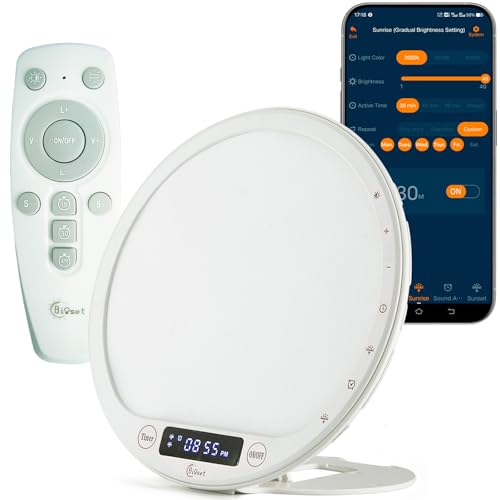
Bioset 10000 Lux Light Therapy Alarm Clock, Sunrise Wake-Up Light with APP & Remote, Built-in Lithium Battery, Portable Travel, Full Spectrum LED (CRI>95), UV-Free for Home Office
【 Powerful 10000 Lux Light Therapy Lamp (UV-Free)】This light therapy alarm clock delivers up to 10000 lux of…
As an affiliate, we earn on qualifying purchases.
As an affiliate, we earn on qualifying purchases.
East or West? Tailor Your Light Strategy for Faster Adjustment
| Travel Direction | What You Need to Do | When |
|---|---|---|
| Eastward (e.g., New York to London) | Seek morning light, avoid evening light | At destination, morning local time |
| Westward (e.g., New York to LA) | Seek evening light, avoid morning light | At destination, evening local time |
Eastward trips are tougher because your body naturally prefers a slightly longer day, making it resistant to advancing the internal clock. When you seek morning light and avoid evening exposure during your biological night, you’re effectively telling your body to shift its rhythm earlier, aligning with the new time zone. Westward trips, which delay your clock, are generally easier because your body’s natural tendency to extend the day complements the need to delay. Recognizing these biological tendencies allows you to tailor your light exposure precisely, reducing adjustment time and mitigating jet lag symptoms more efficiently.

Fygrip 3D Eye Mask Sleep Mask for Men & Women, 100% Pressure-Free & Light Block-Out Eye Mask for Sleep with Easy Adjustable Strap, Night Eye Cover for Travel, Black
【100% Pressure-Free】: Patented 3D contour design with deep & wide eye pockets provides large space for your eyes…
As an affiliate, we earn on qualifying purchases.
As an affiliate, we earn on qualifying purchases.
Pre-Travel: Shift Your Schedule and Light Exposure Days Before
Start adjusting your schedule 2–3 days before departure. If heading east, go to bed 30–60 minutes earlier each night and get morning sunlight to help your body prepare for an earlier schedule. For westward trips, delay your bedtime and seek evening light to push your internal clock later. This gradual shift helps your circadian system adapt gradually, reducing the stress of a sudden change upon arrival.
Using light therapy glasses or a light box can accelerate this process, especially if natural sunlight isn’t available. This pre-trip adjustment creates a head start, minimizing the amount of realignment needed after arrival. The trade-off is that too rapid a shift may cause temporary sleep disturbances, so pacing these changes carefully is essential. Small, consistent shifts are usually most effective and sustainable, leading to smoother transitions and less jet lag.

Light Lamp, Portable Full Spectrum LED Light Sunlight Personal Daylight with 3 Adjustable Color&Stepless Brightness Levels, Timer&Memory Function for Home Office Winter
【10000 Lux Full Spectrum Light】Delivering the medically recommended 10000 Lux for effective light therapy, emulating natural sunlight up…
As an affiliate, we earn on qualifying purchases.
As an affiliate, we earn on qualifying purchases.
In-Flight and Arrival: Use Your Environment to Your Advantage
Once onboard, set your watch to your destination time to mentally prepare for the new schedule. Use window shades and sleep masks to control your light environment—blocking out light when you need to sleep and exposing yourself to light when you want to stay alert. During eastbound flights, avoid bright screens and seek darkness when you need to sleep, as exposure to blue light suppresses melatonin and can delay your adjustment.
On arrival, seek sunlight at the right time—morning for east trips, evening for west. If you land in the afternoon, spend time outdoors to anchor your new schedule. This natural cue reinforces your body’s adaptation and speeds up the process.
Imagine stepping into the sun at 8 AM local time after a long flight—it signals your brain that it’s morning, helping you reset your internal clock faster. Conversely, avoiding bright light during the evening helps maintain your new schedule and prevents confusion between your internal and local time.
Mistakes to Avoid and Extra Tools to Speed Up Your Adjustment
Don’t sleep in on your first morning after eastward travel, as it can delay your adjustment by reinforcing the old schedule. Similarly, late-night screen time exposes you to blue light, which suppresses melatonin and can make falling asleep difficult, prolonging jet lag. Recognizing these pitfalls allows you to maintain the integrity of your light strategy.
Tools like light therapy glasses or smartphone apps such as Timeshifter can generate personalized schedules based on your itinerary and chronotype, optimizing your light exposure. Melatonin supplements can be helpful, but only if timed correctly—taking them at the wrong time can shift your rhythm in the wrong direction or cause additional sleep disturbances. Proper timing ensures these tools support your circadian realignment rather than hinder it.
For example, taking melatonin at 8 PM destination time can help signal to your body it’s night, especially if natural cues are limited. Consistency and adherence to the schedule are key to maximizing these tools’ benefits and minimizing setbacks.
The Future of Light and Jet Lag — Tech and Personalization
New devices like blue-enriched light glasses are emerging, making personalized light therapy more accessible and convenient. These devices can deliver specific wavelengths and intensities tailored to your schedule and chronotype, enhancing the precision of your adjustment. Apps now incorporate your travel itinerary, sleep preferences, and even genetic data to craft customized schedules, making the process more effective and less guesswork.
Research shows that brief flashes of light during sleep—especially during specific sleep stages—might shift your clock more efficiently than continuous exposure. Future tech could integrate these insights, providing seamless, real-time adjustments to optimize your circadian alignment and potentially eliminate jet lag altogether.
Imagine slipping on smart glasses that deliver the perfect light dose, tailored just for you, on your schedule—making jet lag a thing of the past by harnessing the power of personalized light.
Frequently Asked Questions
How long does jet lag usually last if I use light timing strategies?
Typically, jet lag lasts about one day per time zone crossed. With proper light timing, you can halve that duration—sometimes feeling normal within 2 days after crossing 5 zones.
Is eastward or westward travel worse for jet lag?
Eastward travel is generally harder because it requires advancing your internal clock, which is more challenging for most people than delaying it during westward trips. Recognizing this helps you prioritize light strategies accordingly to mitigate the greater difficulty.
When exactly should I get sunlight after arriving at my destination?
Seek morning sunlight if you traveled east, and evening sunlight if traveling west. Properly timed exposure accelerates your circadian adjustment by reinforcing the desired phase shift, making your adaptation faster and more complete.
Can wearing light therapy glasses replace outdoor sunlight?
Yes. High-intensity light glasses can mimic natural sunlight, especially when outdoor exposure isn’t feasible. They deliver targeted wavelengths, which can effectively cue your circadian system, but should be used thoughtfully to match your schedule for optimal results.
Should I take melatonin supplements to beat jet lag?
Melatonin can be effective if timed correctly—typically around 8 PM local time after eastward travel—to signal to your body that it’s night. However, mistimed doses can worsen jet lag or disrupt your sleep further, so understanding your schedule and the timing is essential for safe and effective use.
Conclusion
Understanding when to seek or avoid light transforms jet lag from a guessing game into a science. Your body responds quickly when you give it the right signals at the right times.
Next time you fly across time zones, remember: a little planning with light can make all the difference. Your internal clock will thank you, and so will your energy and mood.