
TL;DR
A flight’s elapsed time is the actual hours in the air, but local arrival time depends on time zones and the International Date Line. That’s why a 6-hour flight can land an hour later or even before it departs in your local time.
Flight durations are measured in actual hours in the air, but local arrival times depend on crossing time zones.
Crossing the International Date Line can cause you to arrive before you depart in local time, especially eastward.
Jet streams and wind patterns make eastbound flights often shorter in actual duration, but crossing zones can make them seem longer on the clock.
Always check flight times in UTC or trust airline apps—local times can be misleading due to time zone differences.
Planning your trip with a clear understanding of elapsed time vs. local time helps avoid confusion and missed connections.
How a 6-Hour Flight Lands 1 Hour Later
Flight duration measures real elapsed time. Your ticket shows two different local clocks. Put time zones, the International Date Line and winds between them, and arrival math can look impossible—even when it is perfectly correct.
Actual gate-to-gate block time.
Five hours gained on local clocks.
What the two local times appear to show.
Six real hours. One apparent hour.
Travel west and the destination clock is behind the departure clock. In this simplified example, each of five westward zone changes cancels one of the six elapsed hours shown by the local clocks.
09:00
Depart according to the origin’s local time.
+6 hours
Six hours truly pass from departure to arrival.
−5 hours
Moving west places the destination five hours behind.
10:00
The arrival clock reads only one hour later.
The clocks are measuring different things
The apparent contradiction disappears once duration, local clock time and the operational UTC timeline are separated.
Local time
Departure uses the origin’s zone; arrival uses the destination’s zone. These are the bold times shown on tickets and airport boards.
Block time
Measured from pushback to gate arrival. It includes taxi time, so it is normally longer than pure airborne time.
UTC / Zulu
Pilots, air traffic control and airline systems use one universal reference so every event sits on a consistent timeline.
Zones change the clock. Winds change the flight.
These effects are separate. Time zones alter the displayed arrival time without changing duration. Winds alter actual duration without changing the zone offset.
| Factor | Changes local clock? | Changes real duration? | Typical effect |
|---|---|---|---|
| Fly west across zones | ✓ Yes | ✗ No | Arrival appears earlier |
| Fly east across zones | ✓ Yes | ✗ No | Arrival appears later |
| Jet-stream tailwind | ✗ No | ✓ Yes | Often shortens eastbound flight |
| Jet-stream headwind | ✗ No | ✓ Yes | Often lengthens westbound flight |
| Daylight saving change | ✓ Yes | ✗ No | Seasonal one-hour shift |
| Taxiing and schedule padding | ✗ No | ✓ Block time | Published duration exceeds airtime |
A day can disappear
Cross westward and add a calendar day; cross eastward and subtract one. The line zigzags to avoid splitting territories.
Zones are not neat slices
Boundaries follow national choices. China uses one nationwide zone, while India and Nepal use half- and quarter-hour offsets.
Samoa skipped a Friday
Samoa moved across the Date Line in 2011, jumping directly from December 29 to December 31.
Every flight is a UTC conversion
Booking systems store time-zone context and offsets, allowing apps to translate one continuous operational timeline into two passenger-facing local times.
Read the itinerary without getting lost
Treat the printed clock times as location labels—not as a stopwatch. The duration field and full date are the reliable guides to how long the journey actually takes.
Trust the duration field
Airline apps calculate elapsed block time after accounting for both airport time zones.
Check the arrival date
A “+1” or “−1” day marker matters whenever the route approaches or crosses the Date Line.
Protect connections
Use the stated layover duration instead of subtracting local clock faces yourself.
Expect seasonal shifts
DST dates differ by country, so the same route can show different offsets in different months.
Plan sleep by direction
Eastbound travel advances the body clock; westbound travel delays it. Adjust light and rest accordingly.
Separate wind from zones
A tailwind can shorten the journey, but only a time-zone change alters the local-time comparison.
Why does my arrival time look wrong?
Because each airport displays its own local time. Subtracting the two clock readings does not produce duration unless both airports share a zone.
Can I arrive before I leave?
On the calendar and local clocks, yes. An eastward Date Line crossing subtracts a day, even though time continues forward normally.
Does daylight saving time affect duration?
It changes displayed local times and offsets, but it does not add or remove an hour from the physical flight.
Why is the listed flight longer than airtime?
Published duration is usually block time, which includes taxiing and may include schedule margin for operational variability.
On the longest flights, clock management becomes part of the product.
Modern A350 and 787 routes cross enough zones that lighting, meals, sleep timing and jet-lag research matter alongside range and fuel. The aircraft follows one continuous timeline; passengers experience a rapid shift between local days.
The real reason your flight duration isn’t the whole story
Flight times are measured in actual hours in the air, from pushback to gate arrival. But what you see on your ticket are local times at each airport, which can be hours apart. The difference? Time zones, not the plane’s speed.
Think of a 6-hour flight crossing five time zones westward. Even though the plane spends six hours in the sky, your local clock might only show a one-hour delay. It’s like chasing the sunset—by moving west, you gain time.
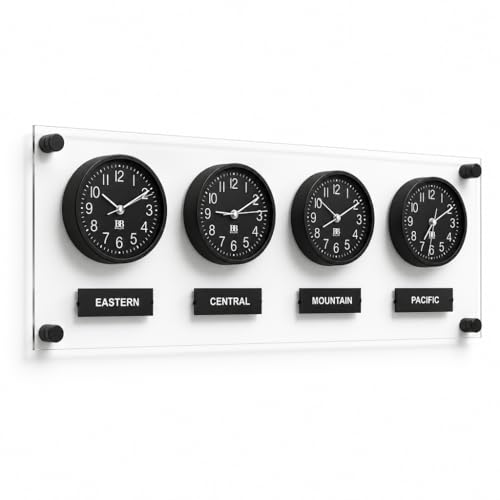
BBHORAIRE Black Time Zone Wall Clock, Silent Quartz Analog World Clock for Home or Office, Battery Operated, 32×12 Inch
- Global Ambition Symbol: Represents growth and international reach
- Modern Acrylic Design: Creates a sleek, professional look
- Silent Quartz Movement: Ensures a quiet, distraction-free environment
As an affiliate, we earn on qualifying purchases.
As an affiliate, we earn on qualifying purchases.
How crossing the International Date Line flips your clock
The International Date Line (IDL) is the world’s time boundary—zigzagging around islands and territories. Crossing it westward adds a day; crossing eastward subtracts one.
Imagine departing Tokyo at 7 PM, heading west across the IDL. You might arrive in Los Angeles at 1 PM the same day, despite the flight lasting over 11 hours. Eastbound flights can land before they even take off in your local time, like arriving in Hawaii before the departure time from the mainland.

eBoot Airplane Airline Flight Adapters for Headphones (3 Pack, Golden Plated)
- Easy headphone connection: Plug headphones into airline jack
- Universal compatibility: Converts dual-prong to 3.5mm stereo
- High-quality signal: Golden plated socket for better transfer
As an affiliate, we earn on qualifying purchases.
As an affiliate, we earn on qualifying purchases.
Why a 6-hour flight can land just 1 hour later—step-by-step
- Departure in local time: 9:00 AM from New York.
- Flight duration in the air: about 6 hours.
- Crossing five time zones westward, gaining roughly 5 hours in local time.
- Landing time in local time: around 12:00 PM, but the clock shows only 1:00 PM.
This means your elapsed time is six hours, but your local clock shows only a one-hour delay. The key is the zone difference—each zone you cross adds or subtracts hours from your arrival time.
As an affiliate, we earn on qualifying purchases.
Why eastbound flights often feel longer
Flying east, the plane fights the jet stream, which blows west→east at altitude. This headwind can add an extra hour or more to the flight’s actual duration. But on the clock, crossing multiple zones means you might arrive hours later in local time.
For example, a 5-hour eastbound flight across three zones might land 8 hours later on your local clock—because you’ve lost time crossing those zones, not because the plane was slower.

Alaska Airlines Travel App
- Flight Booking: Book flights easily
- Push Notifications: Get real-time updates
- Pre-Check-in: Check-in before arriving
As an affiliate, we earn on qualifying purchases.
As an affiliate, we earn on qualifying purchases.
How airlines schedule around time zones and jet streams
Airlines use UTC (Coordinated Universal Time) behind the scenes to plan flights. The departure and arrival times you see are in local zones, but the schedule considers wind, route, and time zone differences.
Modern flight planning tools optimize routing around jet streams to shorten eastbound flights. That’s why some transatlantic crossings can be under 5 hours, even with the same aircraft and route.
Practical tips for travelers: mastering the time zone puzzle
- Trust airline apps for durations—block time includes taxiing and delays.
- Book connections with elapsed time in mind—don’t rely solely on local clocks.
- Plan sleep for eastbound red-eyes—your body’s clock is fighting against the time zones.
- Remember: crossing the Date Line can make you arrive the same or even the previous day.