
TL;DR

Get travel and outdoor gear delivered free — and shop member deals
- Fast, free delivery on millions of items
- Access to Prime Big Deal Days deals on October 6–7
- Prime Video, Amazon Music and more included
Most airlines specify a 22 x 14 x 9-inch limit for carry-ons, but overhead bins vary by aircraft. Checking policies and measuring your bag ensures it fits, avoiding surprises at boarding.
Travelers often assume their carry-on will slide perfectly into the overhead bin. But the reality is, airline policies and aircraft designs vary widely. Knowing these distinctions can save you from last-minute gate-checks or lugging a bag around in frustration.
In this guide, you’ll learn how airline rules differ, what size limits you should adhere to, and practical tips for packing your carry-on to fit comfortably without hassle.
Always measure your carry-on before packing and compare it to your airline’s size restrictions.
Overhead bin sizes vary widely by aircraft, but most are around 22-24 inches long.
Soft-sided luggage offers more flexibility in tight overhead compartments, reducing gate-check risks.
Check airline policies online before your trip to avoid surprises at the gate.
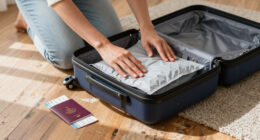
Packing efficiently with cubes and rolling clothes maximizes space and helps your bag fit.
Carry-On Size Rules by Airline: What Actually Fits in the Overhead Bin
Most airlines publish a 22 x 14 x 9-inch carry-on limit, but bins change by aircraft and enforcement changes by carrier. The safest strategy is simple: measure the bag, check the airline policy, and pack for the smallest bin on your route.
The bin may be larger than the rule, but the airline rule is still the boundary.
A spare inch can become a gate-check.
Carry-on rules are not just about storage. A bag that is slightly too tall, too deep, or too rigid can slow boarding, trigger fees, or force a last-minute repack at the gate.
Include wheels and handles
Airline sizing boxes count the full outside dimensions, not just the fabric shell. Measure after packing so bulging pockets are included.
Bins are not universal
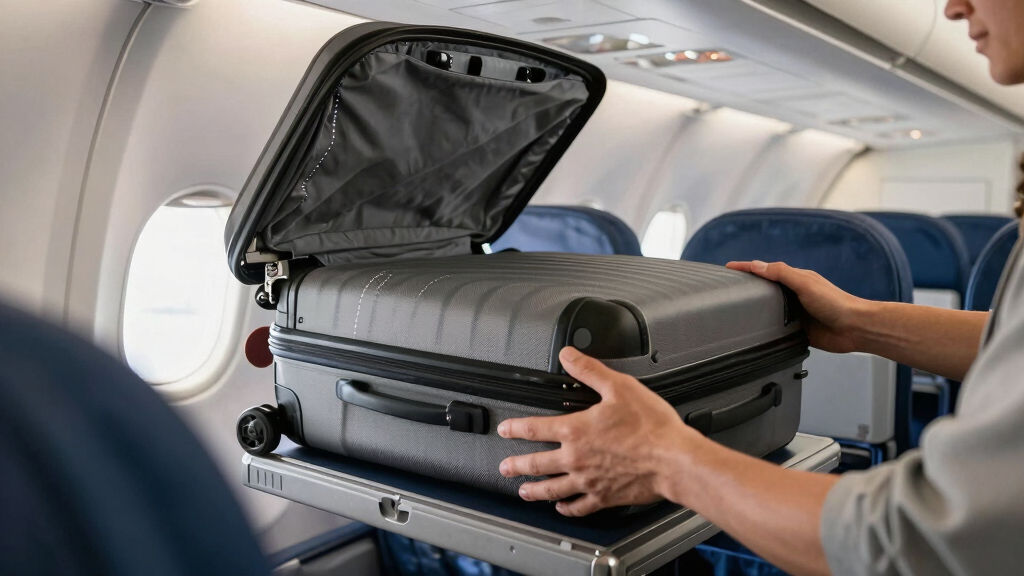
A narrow-body aircraft may feel tight even with a compliant bag, while a wide-body jet can have extra physical room but the same airline policy.
Soft-sided wins tight spaces
Soft luggage and packing cubes help the bag compress into the available shape, reducing the odds of a forced gate-check.
The plane changes the bin. The policy changes the risk.
A Boeing 737 or Airbus A320 often gives you a snug standard-bin experience. A Boeing 777 or Airbus A350 may provide more room, but airlines can still enforce the published carry-on dimensions.
Overhead bin reality check
Most common carry-on bags fit when they stay within 22 x 14 x 9 inches. Trouble starts when expansion zippers, rigid corners, exterior pockets, or overstuffed packing add hidden depth.
Boarding-day decision flow
The best fit plan happens before the airport. Confirm your strictest airline rule, pack to that limit, and keep critical items in your personal item in case the bag is gate-checked.
Check airline
Use the official policy, especially on low-cost or international segments.
Measure packed
Measure height, width, depth, wheels, handles, and bulging pockets.
Compress smart
Use cubes, roll clothes, and keep the bag shape clean.
What usually fits, what sometimes fits, and what gets flagged.
There is no universal carry-on standard. The common 22 x 14 x 9-inch rule is a strong baseline, but weight rules, personal-item rules, and enforcement vary by airline.
| Bag scenario | Fits 22 x 14 x 9 policy | Overhead bin odds | Gate risk | Best move |
|---|---|---|---|---|
| 22-inch soft-sided carry-on | ✓ | Strong fit on most narrow-body and wide-body aircraft. | ✓ | Pack with cubes and avoid overstuffing exterior pockets. |
| 22-inch rigid hard shell | ✓ | Usually fits, but corners and wheels leave less forgiveness. | ~ | Measure the true outside depth before leaving home. |
| 23-inch expandable bag | ✗ | May fit a larger bin, but can fail the airline sizer. | ✗ | Zip expansion closed or choose a smaller bag. |
| Regional-jet roller | ~ | Aircraft-dependent; smaller bins may force gate-checking. | ~ | Keep medication, electronics, and documents in a personal item. |
Pack to the most restrictive rule.
One generous airline does not protect you on a connection with a stricter carrier. Use the smallest posted size and lowest weight limit as your real target.
Do not assume size rules disappear.
Priority may improve bin access or allow an extra item, but many airlines still enforce the same maximum carry-on dimensions at the gate.
From packing choice to overhead-bin outcome.
A smooth boarding experience is the result of small, connected decisions. The bag, the aircraft, the airline rule, and your packing style all stack together.
Most travelers should target 22 x 14 x 9 inches. Larger bins may exist, but airline policy and gate sizers are what decide whether your carry-on stays with you.
Measure before packing, then measure again after packing. A bag that expands by one inch can turn from compliant to risky fast.
Fast answers before you zip the bag.
How do I know if my carry-on will fit?
Check your airline’s official size limit and measure your packed bag, including wheels, handles, side pockets, and any bulging sections.
Can I bring a larger bag with priority boarding?
Sometimes priority improves access to overhead space, but size restrictions usually still apply. Always verify your airline’s policy.
What happens if my bag is too big?
It may be gate-checked, possibly with a fee, or you may be asked to repack at the gate before boarding.
Are carry-on rules universal?
No. Airlines set their own rules, and low-cost or regional carriers may be stricter than the common 22 x 14 x 9-inch baseline.
Why Your Carry-On Size Matters More Than You Think
Your carry-on size can make or break your boarding experience. Airlines enforce strict limits—most around 22 x 14 x 9 inches—yet many travelers underestimate how tight those restrictions are. Even a tiny extra inch can mean gate-checking your bag or squeezing it into a tiny overhead bin.
Understanding these nuances matters because it directly impacts your convenience and the efficiency of boarding. A bag that’s slightly too big often results in delays, extra fees, or the inconvenience of gate-checking, which can be stressful, especially if you’re on a tight schedule. Conversely, knowing the limits helps you choose the right bag and pack strategically, saving time and avoiding frustration.
For example, a soft-sided bag measuring 23 inches long might seem okay at home, but at the gate, it could get flagged, leading to last-minute re-packing or gate-checks. Meanwhile, a rigid, 22-inch bag fits perfectly into the overhead compartment of a regional jet but might be a tight squeeze on a smaller aircraft. Recognizing these differences helps you plan better, pack smarter, and ensure a smoother boarding process.
In essence, the importance of size isn’t just about fitting in the overhead—it’s about reducing stress, avoiding delays, and ensuring you have everything you need for your trip without extra hassle.
carry-on luggage with 22 x 14 x 9 inch size
As an affiliate, we earn on qualifying purchases.
As an affiliate, we earn on qualifying purchases.
How Overhead Bin Sizes Vary by Aircraft Type
Overhead bin dimensions are not one-size-fits-all. A typical narrow-body jet, like a Boeing 737 or Airbus A320, features bins around 22 inches long, 14 inches wide, and 9 inches high. This means your 22 x 14 x 9-inch carry-on fits snugly, but there’s little room for additional bulky items or awkwardly shaped bags. If your bag exceeds these dimensions, it may not fit without tilting or forcing, which can damage the bag or delay boarding.
In contrast, wide-body jets—think Boeing 777 or Airbus A350—offer bigger overhead bins, sometimes 24 inches long or more. These larger bins provide extra space for bulkier or multiple bags, which can be a relief if you’re traveling with more gear. However, it’s vital to note that airlines still enforce their size limits regardless of bin size. Larger bins don’t mean you can ignore the rules; they simply give you more flexibility in packing.
Understanding these differences is crucial because it highlights the importance of knowing your specific aircraft’s features. If you’re transferring from a narrow-body to a wide-body aircraft, your packing strategy might need to adapt. The bigger bins might tempt you to pack more, but your airline’s restrictions are the real boundary. Overlooking this can lead to last-minute gate-checks or re-packing, which can be both inconvenient and costly. Being aware of these variations allows you to optimize your packing choices and avoid surprises, ensuring your carry-on fits comfortably regardless of the aircraft.
Therefore, knowing the aircraft type and overhead bin size helps you make informed decisions, balancing your packing needs with airline regulations to ensure a smooth boarding experience.
soft-sided carry-on luggage for overhead bin
As an affiliate, we earn on qualifying purchases.
As an affiliate, we earn on qualifying purchases.
Defining the Ideal Carry-On Size for Your Trip
To minimize the risk of fitting issues and ensure compliance, it’s essential to define what the ideal carry-on size looks like for your specific travel needs. Start by considering the airline’s restrictions—most commonly 22 x 14 x 9 inches—and then analyze your packing list. Think about the duration of your trip, the type of items you need, and your packing style.
Use a measuring tape to check your current luggage or select a bag that fits within the standard dimensions. If you’re traveling on multiple airlines, select a size that comfortably meets the most restrictive policy. Remember that soft-sided luggage offers more flexibility, which can be advantageous in tight overhead compartments.
By establishing your ideal size based on these factors, you can choose a bag that maximizes space while ensuring it fits within airline limits, making your travel experience smoother and stress-free.
packing cubes for carry-on luggage
As an affiliate, we earn on qualifying purchases.
As an affiliate, we earn on qualifying purchases.
Frequently Asked Questions
How do I know if my carry-on will fit in the overhead bin?
Check your airline’s official size limits and measure your bag carefully. Use a tape measure or a sizing bag to confirm it stays within the maximum dimensions before you pack. Recognizing the importance of precise measurements helps you avoid last-minute surprises, delays, or the inconvenience of gate-checking. Remember, even a small discrepancy can mean the difference between a smooth boarding and having to re-pack or check your bag at the gate.
Can I bring a larger bag if I pay for priority boarding?
Sometimes, premium or priority boarding allows a slightly larger or an extra personal item, which can be convenient. However, each airline’s policies differ, and some enforce strict size limits regardless of your boarding class. It’s essential to verify your airline’s specific restrictions beforehand. Relying on assumptions can lead to surprises, delays, or additional fees, so always check the airline’s policy to ensure your bag complies without risking re-packing or gate-checks.
What happens if my carry-on is too big?
If your bag exceeds the airline’s size limits, it may be gate-checked, often for a fee, or you might be asked to re-pack at the gate. This can cause delays and inconvenience, especially if you’re in a hurry or have tight connections. To avoid this, measure your bag beforehand, and pack efficiently to ensure it stays within limits. Being proactive can save you time, money, and stress at the airport.
Are there universal size standards for carry-ons?
No, each airline sets its own rules, and standards can vary significantly. Some airlines are more lenient, while others enforce strict limits. Always review your airline’s policies before packing to avoid surprises. Knowing the specific size restrictions for your flight helps you pack appropriately and avoid last-minute re-packing or gate-checks.
What types of bags are best to maximize space and fit?
Soft-sided, expandable carry-ons are generally more forgiving in tight overhead compartments because they can mold to available space. They often allow for more efficient packing and can be squeezed into small or irregularly shaped spaces. This flexibility makes them the best choice for maximizing space and ensuring your bag fits comfortably in overhead bins, reducing the risk of gate-checks and delays.
compact rolling suitcase for airline carry-on
As an affiliate, we earn on qualifying purchases.
As an affiliate, we earn on qualifying purchases.
Conclusion
Knowing your airline’s carry-on limits and the physical size of overhead bins transforms packing from guesswork into confidence. It’s a small step that keeps your journey smooth and stress-free.
Next time you pack, measure, compare, and pack smart. Your overhead bin will thank you—and so will your back.
Fall Picks
fall essentials
As an affiliate, we earn on qualifying purchases.