
TL;DR

Get travel and outdoor gear delivered free with Prime
- Fast, free delivery on millions of items
- Prime Video, Amazon Music and more included
- Member-only deals all year
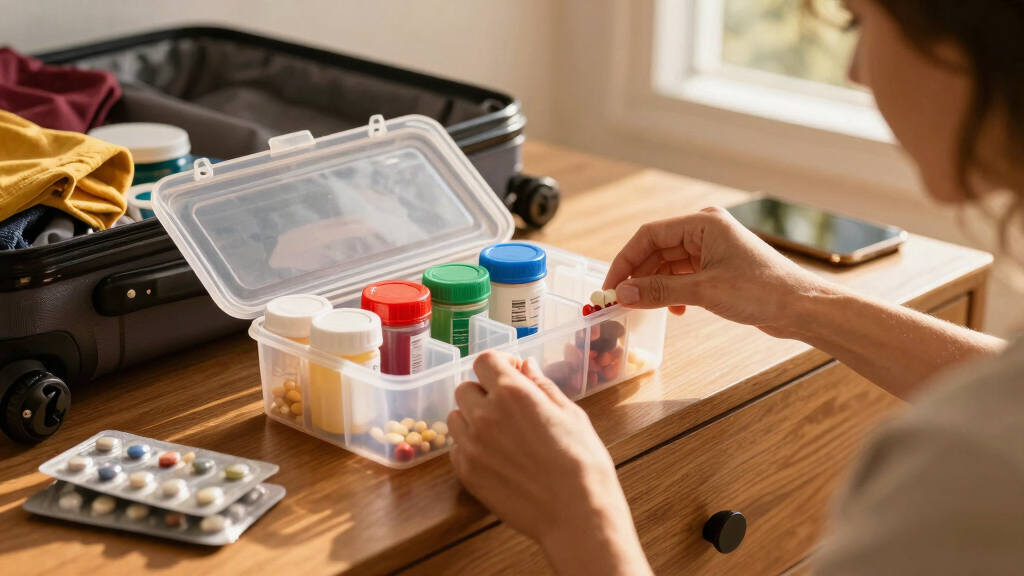
Pack medications in original containers, carry copies of prescriptions, and keep essential meds in your carry-on. Research local laws and plan for temperature needs to travel worry-free.
Always carry medications in their original bottles with labels intact to prove they’re prescribed to you.
Keep essential meds in your carry-on to avoid losing them or delays at baggage claim.
Research the local laws at your destination — some meds are restricted or illegal abroad.
Plan for special storage needs with insulated or portable cooling options.
Carry extra doses and copies of prescriptions in case of delays or emergencies.
How to Pack Medications for International Travel
Keep every essential dose safe, legal, documented, and within reach—from your departure gate to your destination.
Prepare before you pack
A reliable medication plan begins with an accurate inventory and paperwork that clearly connects every medicine to you.
List every medication
Record the medicine name, purpose, dose, timing, and prescribing clinician. Include over-the-counter products.
Copy prescriptions
Carry printed copies and secure digital copies. Make sure names and dosage details match the packaging.
Ask your doctor
Request a signed letter describing your conditions, prescribed medicines, and any devices or supplies you need.
Add a delay buffer
Bring enough for the full trip plus several extra days, subject to the destination’s import limits.
Prepare local wording
Translate generic medicine names, doses, instructions, conditions, and emergency information when useful.
Plan replacement steps
Save contacts for your prescriber, insurer, embassy or consulate, and a reputable provider at your destination.
From prescription to departure gate
Follow the chain in order. Each step reduces a different risk: customs problems, damaged medicine, missed doses, or lost luggage.
Verify
Confirm supply, expiry dates, dosage, and refill timing.
Document
Collect prescriptions, doctor’s letter, and translations.
Research
Check official destination and transit-country rules.
Protect
Use original packaging and required temperature control.
Carry
Keep essential medicine and paperwork within reach.
Legal at home does not mean legal abroad
Rules may differ by country, transit point, medicine class, quantity, and length of stay. Controlled substances deserve extra scrutiny.
Use official embassy, consulate, health ministry, or customs guidance. Ask whether a permit, translated letter, quantity limit, or advance approval applies.
| Medication type | Typical home status | Pre-travel action | Documentation | Packing priority |
|---|---|---|---|---|
| Daily prescription | Prescribed to traveler | ✓Verify destination rules | Prescription copy | Original labeled container |
| Controlled substance | Legal with restrictions | !Check permits and limits | Prescription plus doctor’s letter | Carry-on with records |
| Over-the-counter medicine | Usually unrestricted at home | ~Confirm local classification | Keep product label | Small personal-use amount |
| Injectable or liquid medicine | May require screening | ✓Review security procedures | Prescription or medical letter | Accessible, leak-proof pouch |
| Refrigerated medicine | Storage-sensitive | !Confirm the cold-chain plan | Storage instructions | Insulated carry-on system |
Rules vary. Confirm requirements for every destination and transit country using current official sources.
Protect potency, not just packaging
Heat, freezing, light, and humidity can affect some medicines. Follow the manufacturer’s storage directions and ask a pharmacist how long a product may remain outside its normal range.
What goes where
Your carry-on is the primary medication zone. A checked bag may be delayed, lost, exposed to temperature extremes, or inaccessible when a dose is due.
Keep within reach
- All essential and time-sensitive medication
- Original labeled boxes, bottles, or blister packs
- Prescription copies and doctor’s letter
- Required syringes, devices, batteries, and supplies
- Insulated pouch or approved cooling system
- Extra doses for reasonable travel delays
Do not depend on it
- Nonessential duplicate supplies where permitted
- Sturdy outer protection against crushing or leaks
- No sole supply of a critical daily medicine
- No temperature-sensitive item without a validated plan
- No loose, unidentified tablets or capsules
- No paperwork stored only in this bag
The proof-and-access chain
Each link supports the next. Break the chain and the risk of delay, confusion, or missed treatment rises.
Pack for the delay you do not expect
Set dose reminders across time zones, keep critical items accessible during transit, and know whom to contact if medication is lost or damaged.
How to Make Sure Your Medications Are Ready for the Trip
Preparing your medication list and documentation is the first step to flying worry-free. Write down every medication, dosage, and schedule. Include over-the-counter items like pain relievers or allergy meds.
Get a letter from your doctor detailing your medical conditions and medications. Carry copies of prescriptions — both physical and digital if possible. This paperwork can save you if customs ask questions or if you need a refill abroad.
Bring enough medication to last your entire trip, plus a few extra days in case of delays. For example, if you’re going away for two weeks, pack three weeks’ worth. This ensures you have a buffer in case of unexpected delays or travel disruptions, which are common during busy seasons or unforeseen events. Proper planning reduces the risk of running out of vital meds, which could lead to health emergencies or the need to seek urgent medical care abroad—often at a higher cost or with language barriers.
As an affiliate, we earn on qualifying purchases.
Keep Medications in Original Packaging — Here’s Why It Matters
Original containers with labels prove your meds are legally prescribed to you. Customs agents often check for proper labeling, especially for controlled substances. Proper labeling not only affirms your medication’s legitimacy but also helps avoid unnecessary delays or confiscation. If medications are not in their original packaging, officials might question whether they are legitimately prescribed, which can lead to confiscation or legal issues.
For example, a bottle of blood pressure pills in their original box with your name and prescription number shows you’re compliant. It also prevents confusion at security or immigration checks. Using original packaging minimizes misunderstandings and demonstrates compliance, which is especially critical for controlled substances that are more scrutinized.
While pill organizers are convenient for daily use, relying solely on them can be risky legally. If authorities suspect your pills are not properly documented, they may confiscate them, leading to a health risk if you lose access to your medication mid-trip. Therefore, keeping meds in their original containers is a tradeoff that favors legal safety over convenience, ensuring you avoid potential legal complications that could interrupt your travel plans or compromise your health.
As an affiliate, we earn on qualifying purchases.
How to Pack Medications That Need Special Storage or Handling
Medications like insulin or certain antibiotics must stay cool. Maintaining proper storage conditions ensures their effectiveness and safety. Failure to do so can render medications useless or even harmful, which can have serious health consequences during your trip.
Plan accordingly with insulated bags, portable coolers, or hotel refrigerators. For example, using a travel cooler with ice packs for insulin helps maintain a stable temperature, preventing degradation. It’s important to understand that some medications lose potency or become unsafe if exposed to temperatures outside their specified range. This can lead to ineffective treatment or adverse reactions, especially critical for life-sustaining meds like insulin or certain biologics.
Check the medication’s storage instructions carefully. Some drugs require refrigeration, while others should be protected from light or humidity. Investing in travel-sized, TSA-approved coolers or insulated pouches ensures you can maintain these conditions reliably, avoiding health risks and ensuring medication efficacy throughout your trip. Failing to adhere to these storage needs can compromise your treatment plan and lead to preventable health emergencies, which is why understanding and proactively managing storage conditions is essential for travel safety and medication integrity.
prescription medication travel case
As an affiliate, we earn on qualifying purchases.
As an affiliate, we earn on qualifying purchases.
Understanding and Navigating Legal Rules for Medications Abroad
Research the destination country’s rules on bringing medications. Many countries have strict regulations, and what’s legal in your home country might be restricted or illegal elsewhere. Failing to comply can lead to confiscation, fines, or even legal trouble, which can ruin your trip or cause health issues if you lose essential medication.
For instance, certain sleep aids or allergy medications might be considered controlled substances in other countries. Knowing these differences helps you avoid accidental violations. Checking official government websites or consulting with your healthcare provider can clarify what’s permitted and what’s not.
Carrying a doctor’s note or prescription in the local language can be a crucial safeguard during customs checks, providing clear evidence of your medication needs. This reduces the risk of misunderstandings and potential legal issues, especially for medications that are heavily regulated or restricted. Thorough research and proper documentation are essential to navigate complex legal landscapes and ensure uninterrupted access to your meds abroad.
| Medication Type | Legal in US? | Check Before Traveling? |
|---|---|---|
| Controlled Substances | Yes, but with restrictions | Yes |
| Over-the-counter meds | Usually | Verify local restrictions |
Understanding these legal nuances is vital because many travelers overlook the complexity of international drug laws. A medication legal in the US may be banned or require special permits elsewhere, and ignorance can lead to confiscation or legal action. The implications extend beyond inconvenience; they can threaten your health if you rely on certain medications and cannot access them abroad. Investing time in thorough research and obtaining necessary documentation minimizes these risks, ensuring your travel remains smooth and compliant with local laws.
As an affiliate, we earn on qualifying purchases.
How to Make Sure You Can Access Your Medications During Travel
Keep your essential meds in your carry-on luggage, not checked bags. This prevents loss or delays and ensures you can access them when needed.
For example, if you take an allergy pill daily, pack it in your purse or personal bag. Keep a small, portable pill case for quick access during airport waits or transit. This way, you’re always prepared for sudden needs or delays, and you can avoid emergency situations where medication isn’t immediately available.
Plan for your dosing schedule. If you take meds at specific times, set alarms or reminders to stay on track, even in different time zones. This helps maintain your health regimen without interruption, especially when traveling across multiple time zones with different schedules. Being proactive in managing your medication timing reduces the risk of missed doses, which could compromise your treatment or cause withdrawal symptoms, depending on your medication type. Proper planning ensures continuous care and peace of mind throughout your journey.
Extra Tips to Keep Your Meds Safe and Ready
- Bring backup supplies — extra doses or copies of prescriptions. This ensures you’re prepared for lost or stolen meds and can prevent health emergencies.
- Learn key medication names in the local language. This helps you communicate effectively with healthcare providers or pharmacists if needed.
- Use clear, labeled containers for liquids or gels. Proper labeling prevents confusion during security checks and ensures compliance with airline regulations.
- Have a plan for lost or stolen meds — contact your doctor for replacements. Carrying documentation and knowing your options can expedite replacements and reduce stress.
- Consider travel insurance that covers medication replacement or emergencies abroad. It provides financial safety nets and peace of mind in case of unexpected issues.
These extra precautions are not just about convenience—they are crucial for safeguarding your health and ensuring continuous treatment during your trip. Backup supplies and clear labeling reduce the risk of accidental medication errors or delays, while knowing how to quickly obtain replacements minimizes health risks if the worst happens. Travel insurance adds an additional layer of security, especially when traveling to countries with complex healthcare systems or language barriers. Taking these steps demonstrates comprehensive planning and prioritizes your well-being, making your travel experience safer and more relaxed.
What’s New? Trends in Traveling with Medications
Digital health records and e-prescriptions are revolutionizing medication management for travelers. Secure apps and digital passports store your medication info, making it easier to verify and access your meds internationally without carrying bulky paperwork. This reduces the risk of lost documents and streamlines customs processes.
Travel-friendly containers and TSA-compliant organizers are now widely available, making packing more convenient. However, some countries are tightening rules on controlled substances, which means travelers must stay informed about local regulations to avoid inadvertent violations. Being aware of these trends helps you adapt your packing habits and stay compliant.
During COVID-19, the importance of carrying testing kits and documentation has increased, especially for international travel. Telemedicine consultations abroad are also gaining popularity, offering easier access to prescriptions and medical advice, which can be a lifeline if you need to refill medications or seek guidance during your trip. Staying updated on these trends ensures you’re prepared for the evolving landscape of travel health management.
Your Quick-Start Checklist for Packing Medications
- List every medication, dose, and schedule.
- Get a doctor’s note and copies of prescriptions.
- Keep meds in original containers with labels.
- Use a leak-proof, secure pill organizer.
- Pack essential meds in your carry-on.
- Research local laws and bring necessary documentation.
- Plan for temperature-sensitive meds with insulated bags.
- Learn or prepare translations of medication info.
Frequently Asked Questions
What should I do if I need to carry controlled substances internationally?
Always carry official prescriptions, a doctor’s letter, and check the destination country’s regulations beforehand. Some countries require special documentation or permits for controlled meds.Can I pack liquids or gels of medication in my carry-on?
Yes, but they must follow airline security rules—containers no larger than 3.4 ounces (100 milliliters), placed in a clear, resealable bag. Declare them if asked.What if my medication requires refrigeration?
Use insulated travel coolers with ice packs or plan to keep it in hotel refrigerators. Avoid checked luggage to prevent loss or temperature fluctuations.How do I handle language barriers when explaining my medications abroad?
Prepare written translations of medication names, doses, and usage instructions in the local language. Carry a printed card with this info for quick reference.What should I do if I lose my medication during travel?
Contact your healthcare provider immediately for a replacement prescription. Consider travel insurance that covers medication loss to ease the process.Conclusion
Packing medications for international travel isn’t just about throwing pills in a bag. It’s about smart planning, understanding rules, and staying prepared for surprises. Treat your meds like vital travel companions — because they are. Remember, a little extra effort now can save you headaches later. Before your next trip, check your list, gather your docs, and pack with purpose. Safe travels!Halloween Picks
halloween
As an affiliate, we earn on qualifying purchases.