
For world travel, a smartwatch has to do more than count steps: it may need to handle long flights, unfamiliar streets, trail days, contactless payments, and stretches without reliable power. The Garmin Fenix 8 and Apple Watch Ultra 2 are both rugged, premium choices, but they solve that travel problem differently. Garmin puts battery endurance, outdoor tools, and broad phone compatibility first; Apple offers a more polished extension of the iPhone, with stronger app integration and cellular options on supported models and networks.

Get travel and outdoor gear delivered free with Prime
- Fast, free delivery on millions of items
- Prime Video, Amazon Music and more included
- Member-only deals all year

Amazfit Bip 6 Smart Watch, 1.97" AMOLED Display, GPS, iOS/Android
- ✔ Display: 1.97-inch AMOLED
- ✔ GPS: Built-in; GPS, GLONASS, BeiDou and Galileo
- ✔ Maps: Free downloadable maps listed

Amazfit Active Max Smart Watch, 1.5" AMOLED Display, GPS, iOS/Android
- ✔ Display: 1.5-inch AMOLED; 3,000-nit brightness listed
- ✔ GPS: Built-in; GPS, BeiDou, GLONASS and Galileo
- ✔ Battery life: Up to 25 days
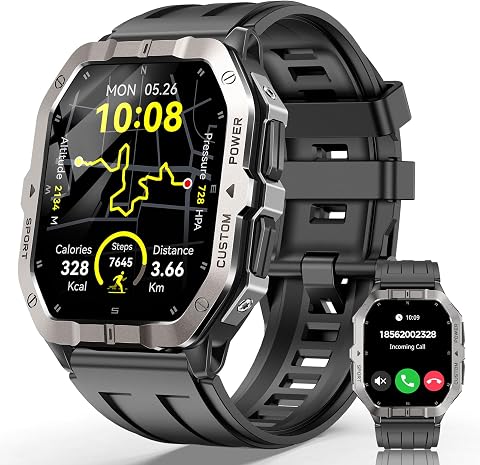
Military Smart Watch for Men – Built-in GPS, 2.02" Fitness Tracker
- ✔ Display: 2.02-inch HD touchscreen
- ✔ GPS: Built-in
- ✔ Battery: 450 mAh; up to 12+ days with Bluetooth calling, up to 30 days standby
The real decision is whether you value independence from daily charging more than a connected, phone-like wrist experience. Fenix 8 is the stronger fit for multi-day hiking, remote trips, and Android users. Ultra 2 makes more sense for iPhone owners who want calls, notifications, apps, and convenient travel features close at hand. Neither is a universal travel winner: destination, phone, activities, and willingness to manage charging all matter.
At a Glance
| Criteria | Garmin Fenix 8 | Apple Watch Ultra 2 | Winner |
|---|---|---|---|
| Battery endurance | Typically lasts several days or longer, depending on model size, settings, and GPS use; solar versions can extend use in suitable light. | Usually requires much more frequent charging than Fenix 8, especially with cellular, GPS, and screen features in use. | A |
| Maps and outdoor navigation | Strong outdoor navigation tools, including downloadable maps on supported configurations, route guidance, and GPS-focused features. | Provides route and activity navigation, but its mapping experience is less suited to replacing a dedicated outdoor navigation watch on extended trips. | A |
| Phone and cellular independence | Works as a capable watch without a phone nearby, but smart notifications and connected features depend on a phone or network connection. | Cellular models can handle selected calls, messages, and online tasks without the iPhone nearby, subject to carrier support and plan availability. | B |
| Travel apps and payments | Useful notifications and Garmin Pay where supported; app selection and everyday smart features are more limited than Apple’s. | Broader third-party app ecosystem, Apple Pay availability, and close iPhone integration make everyday travel tasks more convenient. | B |
| Durability and activity tools | Rugged construction, extensive sport profiles, and useful training and recovery metrics; feature set varies by model. | Rugged design with strong fitness and safety features, though its battery limits extended GPS-heavy trips between charges. | A |
| Phone compatibility | Works with iPhone and Android, with some functions varying by phone and setup. | Designed for iPhone; it is not a practical smartwatch choice for Android owners. | A |
| Value for travel | Better for travelers who get practical value from endurance, maps, and outdoor features; high purchase cost is harder to justify for casual city use. | Worth the premium for iPhone users who will use cellular, apps, and Apple integration; less compelling if long battery life is the priority. | Depends |
Amazfit Bip 6 Smart Watch, 1.97" AMOLED Display, GPS, iOS/Android
The Amazfit Bip 6 offers the most balanced mix of travel-relevant features in this group. Its multi-satellite GPS supports GPS, GLONASS, BeiDou and Galileo, giving travelers more than a basic GPS listing to work with when tracking outdoor routes. The product information also specifies free downloadable maps, a useful advantage over the Military Smart Watch, whose supplied details establish GPS tracking but do not mention maps. Travelers should still check map coverage and offline behavior for their destinations rather than assume every route is available without a phone.Its 1.97-inch AMOLED screen is a strong fit for quickly checking a route or workout in bright conditions, and the aluminum construction is described as lightweight. That makes it a less overtly bulky choice than the Military model’s 2.02-inch screen and metal-alloy bezel. The Bip 6 also has a clearer water-resistance advantage: its 50-meter rating is better suited to swimming than the Military watch’s 2 ATM rating, although water resistance is not a reason to ignore the manufacturer’s usage guidance.The tradeoff is that the Bip 6 is still a Bluetooth-connected watch, not a cellular travel device. It cannot replace a phone for calls or notifications when the phone is out of range, and limited listed memory—512 MB storage and 64 MB RAM—does not suggest a watch designed around a large app library. Its up-to-14-day battery claim is useful, but the Active Max claims up to 25 days and provides 4 GB of storage. We rank the Bip 6 first because its specified maps and multi-system GPS make its travel case more complete, not because it leads every category.
Pros:
- Multi-satellite GPS supports tracking across several navigation systems.
- Free downloadable maps add a travel-oriented feature not specified for the other two watches.
- Bright 1.97-inch AMOLED display and lightweight aluminum build suit outdoor sightseeing.
- 50-meter water resistance and up to 14 days of stated battery life add versatility.
Cons:
- No cellular/LTE connectivity; many smart functions depend on a paired phone.
- Listed 512 MB storage and 64 MB RAM may limit app and media flexibility compared with the Active Max’s 4 GB storage.
- Battery duration can vary with GPS use, screen settings and other active features.
Best for: Travelers who want a balanced everyday watch with multi-satellite GPS, downloadable maps, a bright screen and stronger swimming credentials.
Not ideal for: Travelers who need cellular calls without a phone, extensive onboard storage, or the longest stated battery life in this comparison.
Bottom line: We recommend the Bip 6 as the most well-rounded travel pick because it combines multi-satellite GPS and downloadable maps with a bright display and 50-meter water resistance.
“We recommend the Bip 6 as the most well-rounded travel pick because it combines multi-satellite GPS and downloadable maps with a bright display and 50-meter water resistance.”
Amazfit Active Max Smart Watch, 1.5" AMOLED Display, GPS, iOS/Android
When our priority is reducing charging stops and carrying media on the watch, the Amazfit Active Max has the clearest advantage. Its stated battery life reaches up to 25 days, longer than the Bip 6’s up-to-14-day claim and the Military Smart Watch’s up-to-12-plus-day figure with Bluetooth calling. It also lists 4 GB of onboard storage for music, podcasts and maps. That extra capacity may be valuable when we want selected content close at hand, though the supplied details do not establish exactly how much destination map data can be stored or how offline navigation behaves.The 1.5-inch AMOLED display is listed at 3,000 nits, a notable brightness specification for viewing information outdoors. It is smaller than both the Bip 6’s 1.97-inch screen and the Military watch’s 2.02-inch display, which may suit travelers who prefer a more compact visual footprint but gives less screen area for glancing at a route. The Active Max’s 170-plus workout modes and Zepp Coach plans also make it attractive for trips built around training, while its 50-meter water resistance is a more reassuring fit for swimming than the Military model’s 2 ATM rating.We place it behind the Bip 6 because the Bip’s product information more explicitly pairs multi-satellite GPS with free downloadable maps, making its navigation story easier to assess. The Active Max still lists built-in GPS and support for GPS, BeiDou, GLONASS and Galileo, but no cellular connection is specified; notifications remain dependent on a paired phone. Its 64 MB of RAM is also modest despite the larger storage figure, and the silicone band may feel slippery when wet. Choose it for endurance and onboard capacity, not as a phone-free travel hub.
Pros:
- Up to 25 days of stated battery life is the longest claim in this comparison.
- 4 GB of onboard storage can hold music, podcasts and maps.
- 3,000-nit AMOLED specification targets visibility in bright outdoor conditions.
- Built-in multi-system GPS, 170+ workout modes and 50-meter water resistance support active travel.
Cons:
- The listed 1.5-inch display is smaller than those on the Bip 6 and Military Smart Watch.
- No cellular connectivity; notifications rely on a paired phone.
- The silicone band may become slippery when wet, and 64 MB RAM may limit some app functions.
Best for: Travelers on longer itineraries who prioritize fewer charging stops, onboard media or map storage, bright outdoor readability and training features.
Not ideal for: Travelers who want the largest display, clear evidence of downloadable-map functionality, or calls and notifications without a paired phone.
Bottom line: We choose the Active Max when long stated battery life and 4 GB of onboard storage matter more than a larger screen or the Bip 6’s explicitly listed downloadable maps.
“We choose the Active Max when long stated battery life and 4 GB of onboard storage matter more than a larger screen or the Bip 6’s explicitly listed downloadable maps.”
Military Smart Watch for Men – Built-in GPS, 2.02" Fitness Tracker
The Military Smart Watch for Men is the most ruggedly styled choice here, with a metal-alloy bezel, composite body and a large 2.02-inch HD touchscreen. Its supplied description says the screen remains clear in direct sunlight and has scratch-resistant tempered glass, which could be welcome when travel includes outdoor activities and quick checks on the move. Built-in GPS also lets the watch track outdoor activity without relying on the phone for that GPS function, although it does not come with the Bip 6’s specifically listed downloadable maps.Its up-to-12-plus-day battery claim with Bluetooth calling, 100-plus sport modes and Bluetooth calling cover a broad set of daily needs. Compared with the Active Max, however, it has less stated battery endurance and no listed onboard storage for media or maps. The watch’s sturdy build may also make it feel bulky, particularly beside the Bip 6’s lightweight aluminum construction. That is a real comfort tradeoff for travelers who wear a watch all day or prefer a low-profile fit.Water protection is the clearest functional limitation in this lineup. The Military model lists 2 ATM (20 meters), while both Amazfit watches list 50-meter resistance. We should not treat the Military watch as the best choice for swimming simply because its description calls it waterproof; the stated rating is lower. Its GPS, large screen and rugged design can make sense for land-based outdoor trips, but the two Amazfit options are more compelling when maps, longer battery claims or water activities shape the itinerary. Health measurements are also described as reference-only and should not be used in place of medical equipment.
Pros:
- Built-in GPS tracks outdoor activity without needing the phone for GPS positioning.
- Large 2.02-inch HD touchscreen is described as readable in direct sunlight.
- Rugged-style construction and scratch-resistant tempered glass suit rougher use.
- Bluetooth calling, notifications and 100+ sport modes add everyday utility.
Cons:
- The 2 ATM water-resistance rating is lower than the 50-meter ratings on both Amazfit watches.
- Metal-alloy bezel may feel bulky compared with the Bip 6’s lightweight aluminum build.
- No onboard map or media storage is specified, and battery claims may vary with use.
Best for: Travelers who prefer a large, easy-to-read screen and rugged construction for outdoor activities, with built-in GPS and Bluetooth calling when paired.
Not ideal for: Frequent swimmers, travelers seeking a lightweight watch, or anyone who prioritizes onboard maps, media storage or the longest stated battery life.
Bottom line: We favor this model for travelers who want a rugged, oversized display and built-in GPS, but its lower water rating and bulk make it less versatile than either Amazfit for mixed itineraries.
“We favor this model for travelers who want a rugged, oversized display and built-in GPS, but its lower water rating and bulk make it less versatile than either Amazfit for mixed itineraries.”
As an Amazon Associate we earn from qualifying purchases.
Key Differences
Battery is the most consequential distinction on a long trip. Fenix 8 can cover multiple days between charges in many configurations, while the Ultra 2 generally asks for more regular access to a charger. Exact endurance depends on settings, GPS use, display behavior, cellular use, and the specific Fenix model. On a flight-heavy itinerary, a remote trek, or a trip where charging outlets are inconvenient, Garmin’s advantage reduces planning and makes continuous activity tracking easier. Apple can still suit ordinary travel, but its charging routine becomes part of the packing plan.
Connectivity reverses the advantage. Ultra 2’s cellular option can keep selected communications and online functions available away from an iPhone, provided the model, carrier, plan, and destination support them. Garmin is less phone-dependent for outdoor watch functions, but it is not a substitute for a cellular phone. For navigation, both can help with routes, yet Fenix is better oriented toward outdoor mapping and extended GPS use. For city travel, Apple offers a broader app ecosystem and closer iPhone integration. The better choice depends on whether your trip is more about self-sufficient outdoor time or connected everyday convenience.
Detailed Comparison
Battery endurance (Garmin Fenix 8 wins — major)
Garmin Fenix 8 wins, by a major margin for long, GPS-heavy trips. It is designed to run for substantially longer between charges than Ultra 2, although actual life varies by case size, settings, GPS mode, and solar configuration. That matters when travelling between hotels, camping, or spending full days recording routes. Apple is easier to live with if a charger is always nearby, but frequent charging can interrupt overnight tracking and adds another item to manage.
Garmin wins; the gap is moderate to major for outdoor itineraries. Fenix 8’s outdoor orientation and mapping tools make it the more capable wrist companion for planned routes, hikes, and extended GPS sessions. Ultra 2 can support route and workout navigation, but it is less convincing as a stand-alone tool for remote excursions. For a city break where a phone handles most directions, this advantage matters less.
Phone and cellular independence (Apple Watch Ultra 2 wins — moderate)
Apple wins for communications away from the phone, with a moderate advantage. A cellular Ultra 2 can handle selected calls, messages, and connected tasks without the iPhone nearby when carrier service and an eligible plan are available. Fenix 8 can record activities and use watch features independently, but it does not offer the same cellular smartwatch experience. Neither replaces a phone for every travel task, and roaming support can vary by provider and country.
Travel apps and payments (Apple Watch Ultra 2 wins — moderate)
Apple wins, by a moderate margin for city-focused travel. Ultra 2 benefits from Apple’s broad app ecosystem and close pairing with iPhone, while Apple Pay is convenient where supported. Fenix 8 offers notifications and Garmin Pay in supported markets and with participating banks, but the selection of everyday smart functions is narrower. Travelers should check payment availability for their bank and destinations rather than assume either watch will work everywhere.
Durability and activity tools (Garmin Fenix 8 wins — minor)
Garmin has a modest edge for outdoor activity depth. Both are rugged premium watches with strong fitness and safety features. Fenix 8 is the more natural pick for people who want detailed sport modes, long GPS recording, and training-oriented information alongside travel. Ultra 2 remains capable for fitness and general outdoor use, with Apple’s broader connected features balancing the contest. This is a smaller distinction for travelers who mainly want steps, notifications, and occasional workouts.
Phone compatibility (Garmin Fenix 8 wins — moderate)
Garmin wins clearly for flexibility. Fenix 8 supports both Android and iPhone, though some features and integrations differ by phone. Ultra 2 requires an iPhone, making the choice straightforward for Android users and limiting it for mixed-device households. For iPhone owners, compatibility is a tie in basic terms, but Apple’s deeper integration can be an advantage.
Value for travel (moderate difference)
It depends on what you will use. Fenix 8 earns its high cost when long battery life, navigation, and outdoor training replace or reduce the need for other gear. Ultra 2 can justify its premium for iPhone users who will regularly use cellular connectivity, travel apps, and Apple integration. If you mostly want time, step counts, and occasional notifications, both premium prices are difficult to justify; a less expensive watch may be better value.
Garmin Fenix 8: Pros and Cons
Pros:
- Longer battery life suits multi-day itineraries and extended GPS use.
- Outdoor mapping and navigation features are a strong fit for hiking and remote travel.
- Compatible with Android and iPhone.
- Broad sport and training tools add value for active travelers.
Cons:
- Less extensive app ecosystem and connected smartwatch experience than Apple.
- Garmin Pay support depends on participating banks and locations.
- Premium cost is hard to recover if outdoor features go unused.
- Some features differ by Fenix configuration, settings, and phone.
Apple Watch Ultra 2: Pros and Cons
Pros:
- Strong iPhone integration and a broad selection of compatible apps.
- Cellular models can provide selected communications away from the iPhone when supported.
- Apple Pay and everyday smart features suit city travel.
- Rugged design combines fitness, safety, and smartwatch functions.
Cons:
- Shorter battery endurance makes charging more central to trip planning.
- Requires an iPhone and is unsuitable for Android users.
- Cellular use depends on carrier, plan, and destination support.
- Less compelling than Fenix 8 for prolonged GPS-heavy outdoor trips.
Who Should Choose What
Choose Garmin Fenix 8 if:
- You plan multi-day hikes, camping, or remote travel and want fewer charging stops.
- You want outdoor navigation and detailed sport tracking on your wrist.
- You use Android, or you want a watch that can work with either major phone platform.
- You would rather have dependable endurance than a large catalog of smartwatch apps.
Choose Apple Watch Ultra 2 if:
- You own an iPhone and want a close extension of it while travelling.
- You expect to use calls, messages, apps, and cellular features away from your phone.
- Your trips are mostly urban or hotel-based, with regular charging available.
- You value convenience and connected features more than multi-day battery endurance.
Skip both if: You mainly need basic notifications, time, and step tracking; a less expensive smartwatch or fitness band is likely better value.
Value for Money
Neither watch is a budget purchase, so the higher spend makes sense only when its distinctive strengths will see regular use. Pay for Fenix 8 if its battery life, mapping, and sport tools meaningfully support your itinerary; for an outdoor traveller, those capabilities can justify choosing a specialist watch over a more connected one. Pay for Ultra 2 if you already use an iPhone and will rely on its apps, payments, or cellular functions. Cellular service may add a plan cost, and availability is not universal, so check your carrier before treating it as a travel advantage. For casual sightseeing, paying premium-watch prices for either model is usually unnecessary.
Final Verdict
For world travel overall, choose Garmin Fenix 8 if your trips include extended outdoor days, remote routes, or limited access to charging. Its endurance and outdoor navigation answer the problems that are hardest to solve once you leave a hotel or city center. Choose Apple Watch Ultra 2 if you are an iPhone user whose priority is connected convenience—especially calls, apps, and cellular access away from the phone in places where your plan works. The biggest deciding factor is whether you want a watch that lasts longer on its own or one that acts more like a small iPhone on your wrist. For a mixed itinerary, Fenix 8 is the safer choice when battery and outdoor capability lead; Ultra 2 is the better fit when connectivity leads.
Frequently Asked Questions
Which is better for international travel, Garmin Fenix 8 or Apple Watch Ultra 2?
Fenix 8 is the stronger all-round pick for trips involving outdoor routes, long days, or limited charging. Ultra 2 suits iPhone owners who prioritize apps and connected features. Cellular availability, payments, and phone compatibility can vary by country and provider.
Can Apple Watch Ultra 2 work abroad without an iPhone?
A cellular Ultra 2 can handle selected functions without the iPhone nearby when the carrier, plan, and destination support them. It will not provide every iPhone function, and roaming rules differ, so check coverage and service terms before relying on it.
Is Garmin Fenix 8 better for hiking?
Generally, yes. Its longer battery life and outdoor navigation focus make it a better match for long hikes and GPS-heavy days. Ultra 2 can still support outdoor workouts and routes, but frequent charging and its less specialized mapping experience may be drawbacks on extended trips.
Is the Apple Watch Ultra 2 worth paying more for?
It can be worth the premium if you own an iPhone and will regularly use its connected features, apps, or cellular option. If you mainly want long battery life and outdoor navigation, Fenix 8 is the more relevant spend. If you need only basic travel tracking, skip both premium models.