
TL;DR

Get travel and outdoor gear delivered free with Prime
- Fast, free delivery on millions of items
- Prime Video, Amazon Music and more included
- Member-only deals all year
Different countries use various plug types and voltage standards, so packing the right adapter is key. This guide covers the most common types, recent trends like universal outlets, and practical tips for safe travel.
Imagine arriving at your destination, only to find your charger doesn’t fit the outlet. Frustrating, right? But it’s more than just a hassle—using the wrong plug or voltage can damage your devices or pose safety risks. This guide cuts through the confusion with a straightforward overview of global plug types, recent upgrades, and what you need to know before you travel.
By understanding the most common outlets and the latest in travel power tech, you’ll stay connected and safe no matter where you go. Whether you’re a frequent flyer or planning a one-country trip, this quick reference helps you avoid surprises and pack smarter.
Most travelers only need a handful of universal adapters to cover common plug types.
Always verify if your device supports dual voltage—if not, a converter is essential.
Recent trends point toward multi-standard outlets and USB integration, making power access easier.
Research your destination’s electrical standards well before packing to avoid surprises.
Invest in a high-quality, safety-certified travel adapter that includes surge protection.
What are the main types of plugs you’ll encounter?
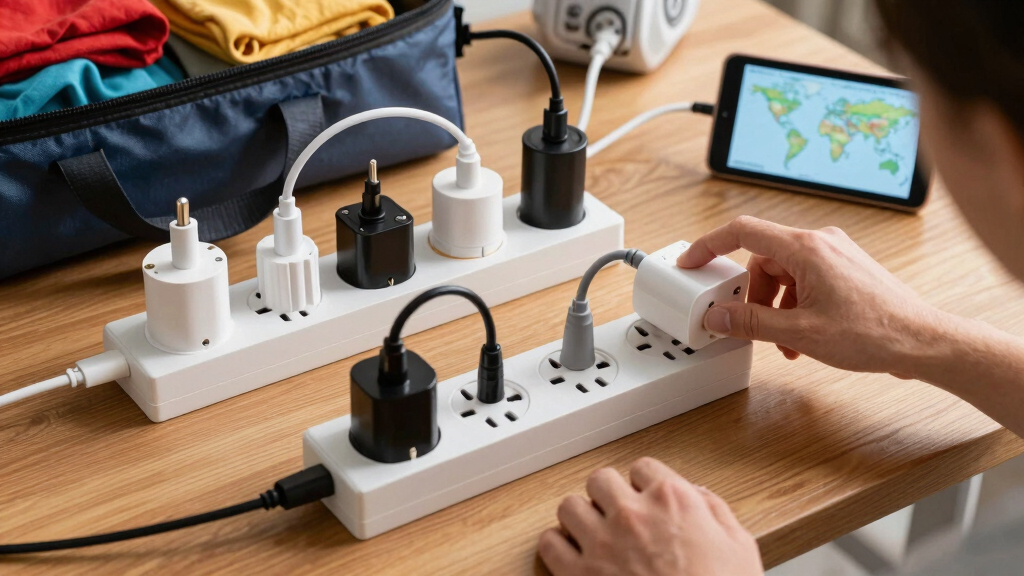
Most countries fall into a handful of plug types, but some have unique variations. The most common are Type A, B, C, G, and I. For example, North America and Japan use Type A (flat pins), while Europe mostly uses Type C (round pins). The UK relies on Type G (rectangular pins), and Australia uses Type I (slanted flat pins). Knowing these basics helps you pack the right adapters and avoid last-minute stress.
Understanding these types is crucial because it directly impacts your ability to connect your devices. For instance, if you arrive in Germany with a North American plug, you’ll need an adapter—otherwise, your devices won’t work. Moreover, some regions may have multiple standards or slight variations, which can cause confusion or damage if mismatched. Recognizing these differences ensures you’re prepared, saving you time and potential costs on last-minute purchases or device repairs.
universal travel power adapter with surge protection
As an affiliate, we earn on qualifying purchases.
As an affiliate, we earn on qualifying purchases.
How to identify your destination’s plug type and voltage
- Check your travel destination’s official embassy or tourism website for detailed electrical standards, including plug type and voltage. These sources provide authoritative info that helps you avoid misinformation or outdated data, which is vital because standards can change or vary within regions.
- Use reliable travel apps that list electrical standards country-by-country. These apps often include user reviews and updates, giving you real-time, practical insights into what to expect upon arrival.
- Look at your device labels—many modern electronics support dual voltage (e.g., 100-240V). This feature is critical because it allows you to use the same charger across different regions, reducing the need for multiple adapters and minimizing clutter in your luggage.
Knowing the exact voltage and outlet type helps you decide whether you need just an adapter or a voltage converter. For example, European outlets typically deliver 230V, which can fry devices designed for 110V if not properly adapted. Being aware of these differences allows you to make informed choices, preventing damage and ensuring your devices operate safely and efficiently during your trip.
multi-standard international plug adapter
As an affiliate, we earn on qualifying purchases.
As an affiliate, we earn on qualifying purchases.
What recent changes make travel easier—are universal outlets real?
Recent advances include the rise of universal travel adapters that fit multiple plug types and include USB ports. These adapters are designed with multiple input sockets, allowing you to connect to outlets in over 150 countries, which significantly simplifies packing and reduces the number of adapters you need. Some models also incorporate safety features like surge protection and ground-fault circuit interrupters, which protect your devices from power surges common in certain regions.
Additionally, many airports and hotels now install multi-standard sockets that can accommodate various plug types simultaneously. For example, a hotel in Dubai might feature a single socket compatible with Type G, I, and C plugs, streamlining the charging process for international guests. These innovations acknowledge the global nature of travel, aiming to eliminate the frustration of incompatible outlets and the need for multiple adapters.
Moreover, the adoption of smart outlets with adaptive technology and energy monitoring is expanding. These outlets can automatically adjust to different voltages and plug standards, reducing the risk of damage and making power management more efficient. The trend towards universal and smart outlets reflects a future where power access is more seamless, safer, and more integrated with modern travel needs.
USB travel power adapter for worldwide outlets
As an affiliate, we earn on qualifying purchases.
As an affiliate, we earn on qualifying purchases.
How voltage and frequency differences impact your devices
Voltage varies from 100V in Japan and North America to 240V in Europe and Africa. Frequency also shifts—50Hz or 60Hz—affecting devices like clocks or hairdryers. Using a device rated for 120V on 220V can fry it, or cause it to work improperly.
For instance, a hairdryer rated for 110V used in Europe might overheat or fail if not connected through a converter. Always check your device label, typically found on the charger or back of electronics, to see if dual voltage (e.g., 100-240V) is supported. This information is vital because using a device with incompatible voltage or frequency can lead to overheating, reduced lifespan, or even safety hazards like electrical fires. Understanding these differences allows you to decide whether a simple plug adapter suffices or if a voltage converter is necessary, ensuring your devices operate safely and efficiently abroad.
As an affiliate, we earn on qualifying purchases.
Comparison table: Common plug types and their regions
| Plug Type | Regions | Voltage | Notes |
|---|---|---|---|
| Type A | North America, Japan | 100-120V | Flat pins, non-grounded. Common in household devices, but check if your device is compatible with the voltage to avoid damage. |
| Type B | North America, some Central America | 100-120V | Type A + grounding pin. Adds safety with grounding, essential for high-power appliances. |
| Type C | Europe, South America, Asia | 220-240V | Round pins, widely used worldwide. Many devices are dual voltage, but verify compatibility. |
| Type G | UK, Ireland, some Middle East | 220-240V | Rectangular pins, grounded. Ensure your device supports the socket’s voltage and grounding requirements. |
| Type I | Australia, China, Argentina | 220-240V | Slanted flat pins, grounded. Check device voltage support; adapters may be needed for non-compatible voltage. |
How to choose the right travel adapter and avoid mishaps
- Always pick a certified, multi-standard adapter for flexibility. This reduces the risk of electrical faults and ensures your devices are protected during power fluctuations.
- Check if your device supports dual voltage—if not, buy a converter. Using a converter for single-voltage devices prevents damage caused by incompatible voltages.
- Test your setup at home first to prevent surprises abroad. This helps you verify compatibility and safety, avoiding potential hazards like sparks or device failure during your trip.
Imagine arriving in Thailand with a Type O outlet—your universal adapter can handle it. But if your device only supports 110V, a converter is a must. The combo of safety and convenience starts with the right gear.
What about countries with unique or rare outlets?
Some nations have distinctive plugs—India’s Type D, Switzerland’s Type J, or Brazil’s Type N. For example, India’s outlets have three round pins in a triangular pattern, requiring a specific adapter. In Switzerland, the J-shaped Type J socket is less common but still essential to know.
If you’re visiting these places, plan ahead. Buying a dedicated adapter beforehand can save you time and hassle, especially if local shops don’t carry universal solutions. This is particularly important because relying solely on universal adapters might not cover all rare outlet types, and attempting to force incompatible plugs can cause damage or safety issues. Preparing with the right, specific adapters ensures your devices will work safely and reliably, avoiding last-minute stress and potential damage.
Frequently Asked Questions
Do I really need a voltage converter, or can I just use an adapter?
If your device supports dual voltage (check the label for 100-240V), a simple plug adapter suffices. If it’s single voltage (like 110V only), then a converter is necessary to avoid damaging your device.
How do I know which adapter to buy for a specific country?
Check official travel resources or use reliable apps that list electrical standards country-by-country. Look for a universal travel adapter with multiple plug types and safety features to cover most destinations.
Are universal adapters reliable for long-term use?
Yes, as long as they are certified and include safety features like surge protection. For extended stays, consider a high-quality, durable model to ensure safety and longevity.
What’s the biggest mistake travelers make with power adapters?
Using a non-certified or cheap adapter without safety features can cause sparks, shorts, or damage to devices. Always opt for quality gear and verify voltage compatibility first.
Can I use my American devices in Europe without a converter?
Only if your device is dual voltage (100-240V). Otherwise, using a converter is essential to prevent damage or malfunction.
Conclusion
Knowing your plug types and voltage standards turns travel from a power puzzle into a breeze. A quick check before packing can save hours of frustration and protect your devices. Stay curious, stay prepared—power up confidently wherever you go.
Remember: the right adapter is your gateway to seamless travel. Don’t leave home without it—and enjoy every outlet-ready adventure.
Halloween Picks
halloween
As an affiliate, we earn on qualifying purchases.