This checklist is for travelers and outdoor explorers who want practical navigation tools for trips on foot, on the water, or away from familiar routes. It covers a mix of electronic devices and simple field gear, with different navigation needs in mind.

Get travel and outdoor gear delivered free with Prime
- Fast, free delivery on millions of items
- Prime Video, Amazon Music and more included
- Member-only deals all year
The sections are organized by gear type: a handheld GPS, compass advice, map case, binoculars, satellite messenger, and trekking poles. Each pick has a distinct role, so consider how the items might work together for your planned routes and activities.
Use the checklist to compare fit, compatibility, and ease of use before choosing. Think through where you’ll travel, what maps or devices you already carry, and which tools you can operate confidently; practice before departure so your setup feels familiar.
Portable GPS navigator
A handheld GPS can help you follow your position and route when traveling beyond familiar streets or trails. The Garmin GPSMAP 86i Floating Handheld GPS with Satellite Communication a is the pick for this slot. Before choosing a device, consider how you will carry and operate it: a screen that is easy to read, controls you can use with your usual gloves, and a form that fits your pack or boat setup all affect everyday usability. Comfortable handling matters when you need to check your location repeatedly.
A common mistake is treating a GPS as a complete navigation plan. Think about the maps and route information you expect to use, and check that they are suitable for your intended destinations and activities. Confirm what accessories or mounting options fit your setup, and consider whether you can keep the device accessible without making it awkward to carry. Try the menus and route workflow before setting out, rather than learning them in the field. Check map compatibility and practice with your planned route so the navigator complements your other navigation tools.
What to look for:
- Readable screen in the conditions where you’ll travel
- Controls you can operate with your usual gloves
- Map and route compatibility for intended destinations
- A carrying or mounting setup that suits your activity
- A familiar workflow you can practice before departure
Garmin GPSMAP 86i Floating Handheld GPS with Satellite Communication and Chartpl

The Garmin GPSMAP 86i is a water-resistant, floating handheld GPS device featuring a sunlight-visible 3-inch display and button operation, ideal for marine use. It offers satellite communication, two-way messaging, and data streaming from compatible chartplotters, making it suitable for navigation and communication on the water.
Pros:
- Water-resistant and floating for marine environments
- Long battery life of up to 50 hours
- Satellite communication for remote connectivity
- Supports chartplotter data streaming and smart notifications
Cons:
- Requires satellite subscription for full communication features
- Limited to 3-inch display, may be small for detailed maps
- Button operation may be less intuitive than touchscreen
Best for: Travelers who want a handheld GPS with satellite communication
Not ideal for: People seeking a compass-only or map-only setup
Bottom line: Choose this pick if its handling, map support, and carrying setup suit your planned route.
Travel compass
A compass is a simple navigation aid that can complement a map and electronic tools. Since this slot has no product pick, focus on advice that applies to whichever compass you consider: choose one that feels clear and steady in your hands, with markings you can read without straining. Check that its scale and features make sense for the maps and navigation methods you plan to use. Readability and familiarity matter more than a feature list you may never use.
A frequent buying mistake is assuming that owning a compass automatically means you can navigate with it. Practice orienting the map and taking a bearing before your trip, and check that you understand the compass’s markings. Consider the size and shape for your usual pocket or pack, and whether you can operate it while wearing your typical gloves. Pair it with a suitable map and learn the process as a set. Practice with your map in a familiar area first; a compass is most useful when you know how to interpret it and can reach it when needed.
What to look for:
- Markings that are easy for you to read
- A scale that works with your maps and methods
- A shape and size that fit your pocket or pack
- Controls you can manage with your usual gloves
- A design you can practice using before travel
Topographic map case
A map case helps keep a paper map accessible while you travel. The SealLine Waterproof Map Case is the pick for this slot. Think about the maps you intend to carry and how you will consult them: the case should accommodate the map without awkward folding, while still letting you read the relevant area. Map access and visibility are central to choosing a case you will actually use.
A common mistake is choosing a case without checking its dimensions against the map and the way it folds. Consider where you will stow or attach it, whether you can remove and refold the map easily, and how the closure works for you. Check that the case can be handled with your usual gloves and that its shape fits your pack or travel setup. A case is useful only if it keeps the map convenient to reach and easy to interpret. Match the case to your map before departure, and rehearse taking it out, consulting it, and putting it away.
What to look for:
- Dimensions that fit your folded map
- A clear view of the area you need to read
- A closure you can use confidently
- A size and shape that suit your pack or attachment point
- Easy access for checking and refolding the map
SealLine Waterproof Map Case
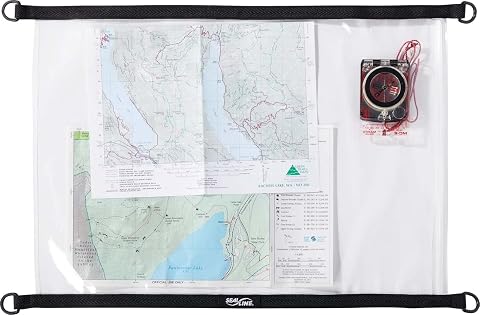
The SealLine Waterproof Map Case is a lightweight, durable case designed to protect maps and documents from water and splashes during outdoor activities. It features a wide-track zip closure, four D-rings for attachment, and polyurethane construction for easy reading and weather resistance.
Pros:
- Lightweight and easy to carry
- Durable waterproof construction
- Easy to access with wide-track zip closure
- Multiple attachment points with D-rings
Cons:
- Limited to one main compartment
- Size may be too large for small backpacks
- No additional storage compartments
Best for: Travelers carrying paper maps in the field
Not ideal for: People who do not plan to carry a paper map
Bottom line: Pick a case that fits your map and remains easy to consult on the move.
Compact binoculars
Compact binoculars can help you view distant details while traveling or spending time outdoors. The Compact 8×21 Binoculars for Adults and Kids is the pick for this slot. Consider who will use them and how they feel in the hand: eye spacing, focus controls, and the position of the eyecups should be comfortable for each intended user. Hands-on fit is especially useful when adults and children may share the same pair.
A common mistake is choosing based on compactness alone. Check that each user can bring the view into focus and hold the binoculars steadily enough for their intended use. Consider where you will carry them and whether the controls are easy to reach without fumbling. If several people will share them, have each person try the fit and focusing process before the trip. Test the focus and eye fit in advance, and confirm the binoculars suit the viewing situations you expect rather than assuming a compact form will meet every need.
What to look for:
- Eye spacing that works for each intended user
- Focus controls that are easy to reach and turn
- Eyecups that feel comfortable during use
- A hold that users can keep steady
- A carrying arrangement that suits your trip
Compact 8×21 Binoculars for Adults and Kids

These lightweight, foldable binoculars feature 8x magnification, 21 mm objective lenses, and coated BAK-4 optics for outdoor viewing. Their aluminum-alloy body has a rubberized grip and is water-repellent, while the center-focus wheel and diopter adjustment support manual focusing.
Pros:
- Compact, foldable design weighs 5.3 oz and fits in a pocket or travel bag.
- 8x magnification and coated BAK-4 optics are designed for clear, color-accurate viewing.
- Rubberized, non-slip armor and an aluminum-alloy frame provide a comfortable grip and impact resistance.
- Includes a carrying case, neck strap, cleaning cloth, and manual.
Cons:
- Water-repellent construction is not suitable for full submersion.
- Low-light viewing requires some light on the object being observed.
Best for: Travelers who want compact binoculars for adults and kids
Not ideal for: People who need a viewing setup they have not tried for fit
Bottom line: Check eye fit, focus, and handling with every intended user before taking them along.
Satellite messenger
A satellite messenger can be part of a communication plan for travel beyond familiar coverage. The Garmin inReach Mini 3 Plus Rugged Global Satellite Communicator with T is the pick for this slot. Consider how you expect to carry and operate it, and whether its controls and display are accessible in your usual travel setup. Reachable and familiar controls make it easier to use the device you choose when you need it.
A common mistake is buying a communicator without understanding its setup and operating requirements. Review what preparation, service arrangements, charging, and phone pairing—if applicable—your intended use requires. Check that you can carry it where it remains accessible and that you know the steps for the communication features you plan to use. Practice those steps before traveling, and include the device in a broader route and check-in plan. Understand the setup before departure, including any requirements that apply to your destinations and intended use.
What to look for:
- Controls and display you can use confidently
- A carrying position that keeps the device accessible
- Setup and service requirements that fit your plans
- Charging needs you can accommodate during travel
- Communication steps you can practice before departure
Garmin inReach Mini 3 Plus Rugged Global Satellite Communicator with Touchscreen

The Garmin inReach Mini 3 Plus is a compact, rugged satellite communicator offering global connectivity through touchscreen texting, photo sharing, voice messaging, and emergency SOS features. It supports seamless satellite switching, smart device pairing, and location sharing, making it ideal for outdoor adventures.
Pros:
- Compact and lightweight design for portability
- Long battery life of up to 350 hours
- Global satellite coverage with seamless switching
- Supports multiple messaging and emergency features
Cons:
- Subscription required for satellite services
- Limited to outdoor and adventure use cases
- Display may be small for some users
Best for: Travelers planning to carry a satellite communicator
Not ideal for: People unwilling to prepare and learn its setup
Bottom line: Confirm the setup requirements and practice the communication steps you plan to use.
Trekking poles
Trekking poles can be a useful part of a walking and hiking kit. The Black Diamond Pursuit Adjustable Trekking Poles (Pair) is the pick for this slot. Fit starts with adjustment: check that you can set the poles to a comfortable length for your height and intended use, and that the adjustment mechanism is easy for you to operate. Secure, comfortable adjustment is key to using poles confidently.
A common mistake is choosing poles without checking the grip, strap, and adjustment range. Try holding them with your usual gloves, and see whether the grip and strap feel comfortable during a natural walking motion. Consider how you will stow or carry them when they are not in use, and whether their folded or extended form suits your pack and route. Check fit in motion before relying on them for a longer outing, and make sure you can adjust and secure them without confusion.
What to look for:
- Adjustment range that suits your height and use
- A locking mechanism you can operate confidently
- Grips that feel comfortable in your hands
- Straps that work with your usual gloves
- A carrying setup that fits your pack and route
Black Diamond Pursuit Adjustable Trekking Poles (Pair)

These lightweight aluminum trekking poles feature a quick-deploying Z-Pole folding system with FlickLock adjustability for customized length. Equipped with natural cork grips, ergonomic straps, and interchangeable tips, they are suitable for all-season hiking and mountain trekking.
Pros:
- Quick-deploying Z-Pole folding system for easy setup
- Natural cork grips for comfort and moisture-wicking
- Adjustable length with FlickLock for precise fit
- All-season performance with interchangeable tips
Cons:
- May be heavier than ultralight models for some users
- Cork grips can wear over time with heavy use
Best for: Walkers who want an adjustable pair of trekking poles
Not ideal for: People who prefer to travel without poles to carry
Bottom line: Check adjustment, grip, and carrying fit before taking the poles on a longer route.
If you are assembling a kit gradually, start with the navigation tools that match your route and the maps you plan to carry. Add communication gear for trips where it fits your plan, then consider comfort items such as binoculars and trekking poles based on how you expect to travel. Prioritize route essentials and make sure each item works with the rest of your setup.
Before departure, practice with the gear you choose and confirm that it fits, works with your maps, and stays accessible. A familiar, thoughtfully packed kit can make it easier to focus on the journey ahead. Build confidence through practice, then enjoy exploring at your own pace.