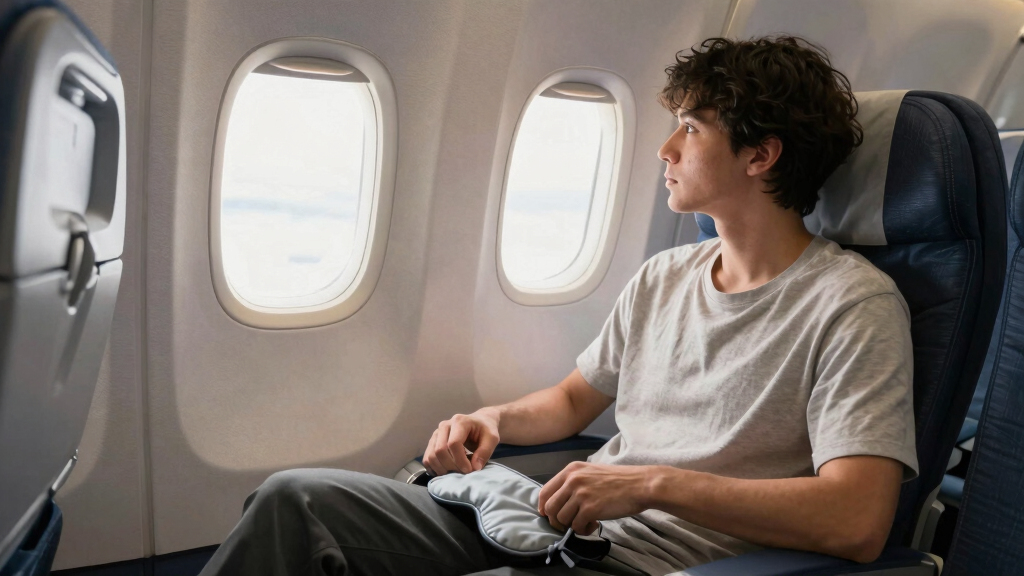

TL;DR
Open a free Amazon Business account
Business pricing, bulk buying and tax-exempt orders.
Create a free accountAs an affiliate, we earn on qualifying purchases.
Whether you should sleep on the plane or stay awake hinges on your route, direction, and arrival time. Aligning your sleep with your destination’s clock can cut jet lag and boost comfort.
Ever landed exhausted or wired, wondering if you should have slept or stayed awake? The truth is, the best choice isn’t universal—it hinges on where you’re headed and when you arrive. A one-size-fits-all approach can backfire, leaving you tired or jet-lagged.
In this guide, you’ll learn how your route, direction, and timing shape whether sleeping on the plane helps or hurts. Armed with practical tips, you’ll be ready to make smarter decisions and arrive ready to conquer your trip.
Align your in-flight sleep with the destination’s night time—sleep when it’s dark at your arrival point.
Eastward flights are tougher—plan for shorter sleep periods; westward trips allow for longer rest and easier adjustment.
Pre-shift your sleep schedule by 1 hour each day before departure to ease the transition.
Use light, melatonin, and meal timing strategically to reinforce your body’s clock shifts.
Balance rest with movement and hydration to avoid DVT and fatigue during long flights.
In-Flight Sleep Strategy / Route-Based Guide
Should You Sleep on the Plane or Stay Awake?
There is no universal right answer. The smartest choice hinges on your route, your direction, and your arrival time. Align in-flight sleep with your destination’s clock, and you can cut jet lag dramatically — get it wrong, and a one-size-fits-all nap can backfire.
“Sleep on the plane only when it is nighttime at your destination.”
The Governing Rule — Set Your Watch at Boarding
50%
Fewer jet lag symptoms when sleep matches destination night
4+
Time zones where deliberate planning pays off
24.2h
Your natural body clock — slightly longer than a day
1day
Recovery per time zone crossed (faster westward)
0.5–5mg
Studied melatonin dose at destination bedtime
5–6h
Caffeine half-life — mind late destination-day use
01 — Why Direction Decides
Three routes, three different answers
Eastbound travel compresses your day and forces your clock to advance — physiologically the hard direction. Westbound travel extends your day, which your ~24.2-hour rhythm does naturally. North–south routes barely shift the clock at all.
Eastbound — Hard
Advance the clock
E.G. NYC → LONDON · ARRIVE MORNING
Red-eye arrivals mean the flight is your night. Sleep immediately after takeoff, skip the meal service, and treat it as a short 4–5 hour night with eye mask, earplugs and neck support.
Verdict: Sleep early & fast
Westbound — Easier
Delay the clock
E.G. LONDON → NYC · ARRIVE EVENING
Your body delays more easily than it advances. Stay awake most of the flight — a 20–30 minute nap is fine — then go to bed at a normal local hour to lock in the new zone.
Verdict: Stay awake, nap OK
North–South — Minimal
No clock shift
E.G. NYC → BUENOS AIRES · SAME ZONE
Jet lag is essentially absent regardless of flight length. Sleep per a normal night — your fatigue comes from sleep quality and duration, not circadian disruption.
Verdict: Sleep normally
02 — The Route Cheat Sheet
Sleep or stay awake, by route
The backbone of the strategy: match the plan to the route’s demands. For trips shorter than 2–3 days, many sleep scientists advise not fully adjusting — staying near home time beats a partial shift you must reverse on return.
| Route Type | Example | In-Flight Verdict | How to Execute |
|---|---|---|---|
| Eastward transatlantic | NY → LONDON | ✓ Sleep | Sleep right after takeoff; skip meal service; short night of 4–5 hours. Balance duration — oversleeping breeds grogginess. |
| Westward transatlantic | LONDON → NY | ✗ Stay awake | Limit naps to 20–30 min; get up and stretch; sleep at local bedtime. Hydrate to hold alertness. |
| Westbound to Asia | US WEST → TOKYO | ~ Nap only | The flight falls in destination daytime. Nap briefly if needed, avoid long sleep, push through to local night. |
| Eastbound from Asia | TOKYO → US | ✓ Sleep | It is night at your destination — maximize sleep quality with mask, noise-canceling headphones, good positioning. |
| Ultra-long-haul (15+ h) | SPLIT INTO BLOCKS | ~ One block | Divide the flight: one main sleep period aligned to destination night, plus deliberate meal and light timing. |
03 — Reinforce the Shift
Four levers that make or break the plan
Sleep timing is the skeleton — these cues are the muscles. Synchronize them with your direction and destination zone, or they can push your clock the wrong way.
Light
STRONGEST ZEITGEBER
The most powerful clock cue. Eastward: seek morning light to shift earlier. Westward: seek evening light to stay up later. Timed seeking and avoidance beats everything else.
Melatonin
0.5–5 MG · COCHRANE-BACKED
A chronobiotic, not a knockout pill. Take 0.5–3 mg about 2–3 hours before destination bedtime. Timing matters more than dose — wrong timing shifts the clock backwards.
Caffeine
HALF-LIFE 5–6 H
Buys alertness when you must stay awake, but evening caffeine itself delays the body clock by ~40 minutes. Cut it off well before destination bedtime.
Meal Timing
~16 H FAST PROTOCOL
Animal research identified a food-entrainable oscillator: fast roughly 16 hours, then break it with breakfast at destination time. Human evidence is suggestive, not conclusive.
Big eastward shifts (~8+ zones): early-morning light can hit the wrong part of the phase-response curve and shift you the wrong way. That is why jet-lag apps schedule explicit “avoid light” windows — follow them.
04 — The Numbers Behind It
Adaptation speed & zone thresholds
The benchmark is roughly one day per time zone crossed — somewhat faster westward, slower eastward. Below ~2–3 zones, most people adjust with little strategy; at 4+ zones, planning pays off.
Relative Adaptation Ease by Direction
Time Zones Crossed — Strategy Spectrum
05 — The 60-Second Decision
Run this check the moment you board
Set your watch and phone to destination time, then behave accordingly. Match sleep to arrival time — miss it, and you prolong jet lag, fatigue and foggy performance.
Set watch to destination
At boarding, not landing
Check arrival time
Morning or evening landing?
Is it night there now?
Destination clock rules
Act on the answer
From Takeoff to Touchdown
Why your flight route determines if you should sleep or stay awake
The route you take—eastward, westward, north-south—dictates how your body responds and whether sleeping on the plane is beneficial. Eastbound flights are tougher because they force your body to advance its clock, which is harder than delaying it. Westbound trips, on the other hand, align more naturally with our internal rhythm.
For example, a flight from New York to London (eastward) often arrives in the morning, so sleeping immediately after takeoff helps you sync with destination time. Conversely, a flight from London to New York (westward) usually arrives in the late afternoon or evening, so staying awake is better to adjust quickly.
Understanding these route effects matters because it influences your body’s ability to adapt to new time zones. Eastward travel compresses your internal clock, making it more challenging to stay awake or sleep at the right times, which can lead to increased fatigue and jet lag. Westward routes tend to extend your day, allowing your body to adjust more gradually, reducing fatigue.
Choosing the right sleep strategy based on route helps your circadian rhythm realign more efficiently, minimizing jet lag symptoms and helping you arrive more refreshed for your activities.

MZOO Luxury Sleep Mask for Women Men Patented Light Blocking Design
- Zero Eye Pressure: Deep 13mm arc-shaped eye cups
- Ideal for Side Sleepers: 15°-curved thin sides for comfort
- Complete Light Blocking: Contoured cups and 22mm nose padding
As an affiliate, we earn on qualifying purchases.
As an affiliate, we earn on qualifying purchases.
How to decide when to sleep based on your arrival time
The key in-flight rule: sleep when it’s nighttime at your destination. If you arrive in the morning, sleeping early on the plane allows you to rest and wake up aligned with local daylight hours, helping you adapt faster. If you arrive in the evening, staying awake during the flight prevents you from waking up too early or feeling groggy upon arrival.
This timing matters because your body’s internal clock is tuned to local light-dark cycles. Sleeping at the wrong time can delay your adaptation, worsening jet lag. For example, if you land in Paris at 7 AM local time, sleeping on the flight helps you start the day well-rested, easing your transition. Conversely, arriving at 9 PM suggests you should stay awake during the flight so you can sleep at your destination’s bedtime, which helps your circadian rhythm sync more quickly.
Failing to match your sleep to your arrival time can prolong jet lag, cause fatigue, and impair your performance. Therefore, planning your sleep based on your expected arrival time is a crucial step in managing jet lag effectively.

SAIREIDER Travel Pillow 100% Pure Memory Foam Travel Neck Pillow, Airplane Pillow for Traveling、Car、Home、Office,Washable Cover(Black)
- All-around neck support: 360° support for neck, head, and chin
- Premium materials: 100% pure memory foam and soft fabric
- Adjustable sizes: Three sizes for a customized fit
As an affiliate, we earn on qualifying purchases.
As an affiliate, we earn on qualifying purchases.
Route-specific sleep strategies that actually work
| Route Type | Sleep Strategy | Tips |
|---|---|---|
| Eastward transatlantic (NY→London) | Sleep immediately after takeoff | Use eye masks, earplugs, neck pillow; skip meal service; treat as a short night (4–5 hours). This helps you simulate nighttime, aiding your circadian adjustment. However, be aware that sleeping during eastward flights can sometimes lead to grogginess or disorientation upon arrival, especially if sleep quality is poor. Balancing sleep duration and quality is key—don’t push for too long a rest if it leaves you feeling unrefreshed. |
| Westward transatlantic (London→NY) | Stay awake most of the flight | Limit naps to 20–30 mins; get up and stretch; plan to sleep at local bedtime. This approach helps your body delay its internal clock, making it easier to adjust to the new time zone. However, staying awake can be challenging, especially if you’re tired, so strategic napping and hydration are essential to maintain alertness and prevent fatigue. |
| Westbound to Asia (US West Coast→Tokyo) | Limit in-flight sleep, push for local night sleep | Nap briefly if needed; avoid long sleep; stay alert to adapt upon arrival. This route benefits from delaying sleep to match the destination’s night cycle, but it can be tough to stay awake during long flights. Proper planning and light exposure upon landing can facilitate faster adjustment, though it may require mental effort to resist drowsiness. |
| Eastbound from Asia (Tokyo→US) | Sleep on the plane | It’s night at your destination; maximize sleep quality. Sleeping during eastward flights helps your body adapt to the advancing time zone. Ensuring good sleep quality with eye masks, noise-canceling headphones, and comfortable positioning enhances recovery. Be mindful that over-sleeping or poor sleep can lead to disorientation, so aim for a balanced rest period. |
These strategies aren’t just rules—they’re tailored moves to match the route’s demands, helping you arrive more refreshed and less jet-lagged. Understanding the implications of each approach allows you to weigh the tradeoffs—like sleep quality versus alertness—so you can choose the most effective plan for your journey.
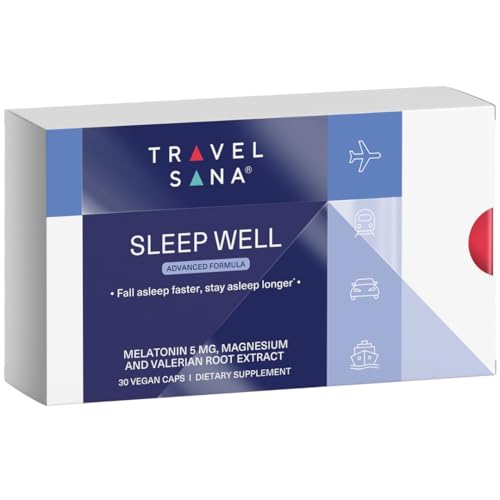
TRAVELSANA Sleep Aid & Jet Lag Support for Travel | Valerian Root Extract, Melatonin 5 mg & Magnesium | Natural Sleep Supplement for Adults | Travel Essentials | Sleep Well | 30 Vegan Caps
- Promotes natural relaxation and sleep: Melatonin, Valerian, Magnesium for restful sleep
- Supports jet lag recovery: Helps adjust sleep cycle during travel
- Travel-friendly design: Lightweight, water-resistant capsules for on-the-go use
As an affiliate, we earn on qualifying purchases.
As an affiliate, we earn on qualifying purchases.
Why timing light and melatonin can make or break your sleep plan
Light is the most powerful cue for your body clock because it directly influences your circadian rhythm. Properly timed exposure to bright or dim light can accelerate or delay your internal clock, which is crucial during travel. For eastward trips, morning light exposure helps delay your circadian phase, making it easier to fall asleep earlier and wake up aligned with your destination. For westward trips, evening light helps advance your clock, allowing you to stay up later and wake up closer to local time.
Melatonin, a hormone that signals night to your brain, can be a potent tool when used correctly. Taking melatonin at the right time can help your body recognize it’s night at your destination, speeding up adjustment. For example, taking 0.5–3 mg of melatonin about 2–3 hours before your destination’s bedtime can help delay or advance your circadian rhythm, depending on your route. However, inconsistent timing or incorrect doses can push your clock in the wrong direction, worsening jet lag symptoms.
For instance, eastbound travelers flying from LA to Tokyo might take melatonin in the early evening of their first days to help delay jet lag, while westbound travelers heading to Europe should avoid late-night light exposure and consider melatonin to help delay their adaptation. The key is to synchronize these cues with your travel direction and destination time zone for optimal results.

Summer Fridays Jet Lag™ Essentials – Mini Hydrating Skin Care Set With Jet Lag™ Mask, Eye Patches, Deep Hydration Face Serum & Hydration Mist – Travel Size Skincare Kit & Gift Set (4 Count)
- Set Includes Four Bestseller Products: Eye Patches, Serum, Mist, Mask
- Hydrating Jet Lag Eye Patches: Infused with caffeine and peptides
- Versatile Jet Lag Mask + Moisturizer: Use daily, overnight, or on-the-go
As an affiliate, we earn on qualifying purchases.
As an affiliate, we earn on qualifying purchases.
The tradeoffs: Sleep quality vs. DVT risk and fatigue
Sleeping the entire flight can seem ideal for maximizing rest, but it comes with significant tradeoffs. Deep sleep periods increase the risk of deep vein thrombosis (DVT), a condition caused by blood clots forming in immobilized legs, especially during long-haul flights. The risk is compounded by dehydration and reduced circulation due to cabin pressure and dry air. Incorporating periodic movement—like stretching and walking—can mitigate this risk, but it may interrupt your sleep cycle, leading to fragmented rest.
Additionally, cabin air is notably dry, and the pressurized environment at 6,000–8,000 ft can cause dehydration, fatigue, and headaches. These effects can be worsened if you sleep excessively without hydration or movement. While alcohol might seem to promote sleep, it actually reduces sleep quality and exacerbates dehydration, making you feel worse upon waking.
Balancing sleep with movement and hydration is essential. Short naps combined with regular stretching and drinking water help maintain circulation, prevent DVT, and reduce fatigue. Recognizing these tradeoffs enables you to plan your in-flight routine better—rest enough to recover but stay alert enough to prevent health risks.
Pre-departure prep: Can you shift your sleep schedule ahead of time?
Yes, proactively adjusting your sleep schedule before departure can significantly ease your jet lag. Gradually shifting your bedtime and wake time toward your destination’s time zone—about 1-hour increments daily—helps your internal clock adapt in advance. This pre-shift reduces the discrepancy your body faces upon arrival, leading to less fatigue and quicker adjustment.
For eastward trips, going to bed earlier and waking up earlier each day aligns your schedule with the destination’s early hours. For westward trips, staying up later and waking up later helps your body delay its internal clock. This method requires planning and discipline but pays off by making your in-flight experience less disruptive and your arrival more comfortable.
For example, if flying from Chicago to Bangkok, start adjusting your sleep schedule three days before departure—each day shifting your bedtime and waking time by an hour. This gradual change helps synchronize your circadian rhythm closer to local time, reducing jet lag symptoms and enhancing your overall travel experience.
Practical tips for sleeping well on the plane
- Choose a window seat to lean against the wall and avoid being disturbed.
- Use an eye mask and noise-canceling headphones to block out cabin light and noise.
- Dress in layers—airplanes can be cold or warm, and comfort helps you rest.
- Bring a neck pillow and seatbelt to stay secure and avoid awkward positions.
- Limit caffeine and alcohol; stick to water or herbal tea.
Frequently Asked Questions
Should I sleep on an overnight or red-eye flight, or power through?
If you arrive in the morning, sleeping on the plane helps you reset your clock. For evening arrivals, staying awake during the flight and sleeping at your destination’s bedtime works best. It’s about matching sleep to your destination’s schedule.Does the direction I’m flying really change the answer?
Absolutely. Eastward flights are harder because they force your body to advance its clock, which is more taxing. Westward trips tend to be easier, as they align better with our natural tendency to delay.Is it bad to sleep the whole flight? (jet lag vs. DVT/movement tradeoffs)
Sleeping the entire flight can boost rest but increases risks like deep vein thrombosis (DVT). Incorporate movement and hydration; balance sleep with light activity for safety and comfort.How do I sleep comfortably on a plane in economy?
Choose a window seat, bring a neck pillow, use an eye mask and noise-canceling headphones, wear comfortable layers, and limit caffeine and alcohol. Small adjustments can make a big difference.When should I take melatonin for my trip — and how much?
Take 0.5–3 mg about 2–3 hours before your destination’s bedtime. Timing is key—taking melatonin at the wrong time can delay your adjustment or worsen jet lag symptoms.Conclusion
Choosing whether to sleep or stay awake isn’t just a gut feeling—it’s a strategic move based on your route, timing, and destination. When you match your in-flight behavior to these factors, you arrive less exhausted and more prepared to enjoy your trip.
Next time you book, think beyond the seat—consider your route and arrival time. Your body will thank you with less jet lag, sharper focus, and a better start to your adventure.
College move-in / dorm season Picks
dorm essentials
As an affiliate, we earn on qualifying purchases.