TL;DR
Prime for Young Adults — start your free trial
Fast free delivery, streaming and member deals for eligible 18–24 year olds.
Try it freeAs an affiliate, we earn on qualifying purchases.
Most modern electronics are dual-voltage and only need a plug adapter. Single-voltage devices require a voltage converter to operate safely in countries with different standards. Using the wrong device can cause damage or safety issues.
Most modern electronics (smartphones, laptops) only need a plug adapter abroad.
Check your device’s voltage label—if it’s 100-240V, a simple adapter suffices.
Single-voltage devices (like some shavers) require a voltage converter to prevent damage.
Universal travel adapters with USB ports are versatile and convenient for most travelers.
Avoid relying on cheap, unbranded converters—quality and safety matter for your devices.
What’s the real job of a travel adapter—and what it doesn’t do
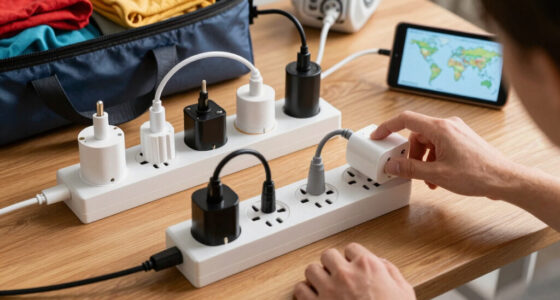
A travel adapter is a tiny, lightweight gadget that changes the plug shape to fit foreign outlets. It’s like a universal key for different locks. But it does not alter the voltage or frequency—meaning your device still receives the same electrical current as it does at home.
For example, if you’re in Europe using a US-style plug, a travel adapter lets you connect your phone charger to the wall. But if your charger only works on 110V, plugging it into a 220V outlet without a converter risks frying your device.
Think of it as the right key but still needing the right lock—your device’s electrical requirements are the lock, and the adapter just helps you fit the key. If you ignore this distinction, you risk damaging your device or experiencing safety hazards. The importance lies in understanding that a travel adapter alone isn’t enough for devices that aren’t dual-voltage; using one blindly can lead to costly repairs or dangerous malfunctions.
universal travel power adapter with USB ports
As an affiliate, we earn on qualifying purchases.
As an affiliate, we earn on qualifying purchases.
When to reach for a voltage converter—and why you might not need one
A voltage converter actually changes the electrical current from the outlet’s standard to your device’s required voltage. This is crucial for single-voltage devices that are not built to handle different power standards.
Say you packed a vintage electric shaver that only supports 110V. In Europe, where outlets run at 220V, plugging it in without a converter could instantly damage or ruin it. In this case, a voltage converter acts like a translator, converting 220V down to 110V safely. However, this isn’t just about preventing damage; it’s also about safety. Using a converter on the wrong device or with a low-quality model can cause overheating, electrical fires, or damage to your appliance. The key is to match your device’s voltage requirements precisely and choose a converter rated for the wattage of your device. For most modern electronics, especially laptops and smartphones, a converter is unnecessary because they are designed to handle multiple voltages. The tradeoff is that converters are bulkier, heavier, and more expensive, so knowing when they’re truly needed can save you hassle and weight.
In summary, understanding whether your device needs a converter hinges on its voltage support and power needs. Using a converter only when necessary ensures safety and efficiency while avoiding unnecessary bulk.
voltage converter for international travel
As an affiliate, we earn on qualifying purchases.
As an affiliate, we earn on qualifying purchases.
Compare the two: Adapter vs Converter — what’s the difference in a nutshell
| Feature | Travel Adapter | Voltage Converter |
|---|---|---|
| Purpose | Fits plug shape to different outlets, enabling connection | Modifies electrical voltage to match device requirements, ensuring safe operation |
| Size & Weight | Small, lightweight, pocket-friendly — ideal for minimal packing | Bulkier, heavier, less portable — suitable for longer trips or high-power devices |
| Cost | Generally cheaper, more accessible | More expensive due to complexity and capacity |
| Use case | Dual-voltage devices, basic travel needs, quick trips | Single-voltage devices, high-power appliances like hair dryers or electric shavers |
| Safety | Safe if device is dual-voltage; otherwise, risks damage | Necessary for non-dual-voltage devices to prevent damage and hazards |
As an affiliate, we earn on qualifying purchases.
Modern travel power solutions — what’s new and helpful
Travel gear has evolved fast. Today, many adapters come with multiple plug types, USB ports, and surge protection. Some even automatically detect voltage and switch accordingly, making life easier. These features reduce the need for multiple devices, streamline packing, and enhance safety. For instance, a smart universal adapter with auto-voltage detection can automatically switch between 110V and 220V, ensuring your device gets the correct power without manual adjustments. This reduces the risk of user error and damage caused by mismatched voltage. Moreover, built-in surge protection helps guard your devices against voltage spikes, which are common in some regions. Portable voltage converters have also improved—shrinking in size but still capable of handling high wattages. For high-power appliances like hair dryers, some travelers opt for dedicated converters rated for 2000W or more, especially for extended stays. The tradeoff is between convenience and capacity: modern solutions aim to maximize versatility while minimizing bulk, but understanding their limits is key to safe and effective use.
single voltage shaver voltage converter
As an affiliate, we earn on qualifying purchases.
As an affiliate, we earn on qualifying purchases.
The must-know facts about power compatibility
Most smartphones, tablets, and laptops are designed to run on 100-240V, making them compatible worldwide with just a plug adapter. Check your device’s label—look for a voltage range like ‘100-240V, 50-60Hz.’ This flexibility is a huge advantage, as it allows you to travel light without packing heavy converters for these devices. However, older or specialized gadgets—like vintage shavers or electric toothbrushes—might only support 110V. For these, a voltage converter is your safety net, preventing potential damage or safety hazards. The implications are significant: using a device outside its supported voltage range can cause immediate failure or long-term damage, risking safety and costly repairs. Conversely, using a converter unnecessarily can cause overheating, electrical fires, or damage your device. Therefore, always verify your device’s voltage support before plugging in, and consider the tradeoffs—safety versus convenience—when choosing your gear for travel.
Your burning questions—answered
- Do I need a voltage converter for my laptop? Most modern laptops are dual-voltage and only need a plug adapter. Check the label to be sure. If your laptop supports 100-240V, you can travel light with just an adapter, saving space and weight. However, if it only supports 110V, a converter is essential to prevent damage and ensure safe operation.
- Can I use my American hairdryer in Europe? Only if it supports 220V. Otherwise, a voltage converter is a must. Using a non-compatible device without proper conversion can cause overheating, damage, or safety hazards. Always verify your appliance’s voltage support before plugging in.
- What’s the difference between a travel adapter and a power strip? An adapter fits plug shapes, enabling your device to connect to different outlets; a power strip adds multiple outlets but doesn’t change voltage or handle power conversion. Using a power strip without voltage conversion can be risky if your devices aren’t compatible with the local voltage.
- Are universal adapters safe? Yes, if certified and used correctly. They are designed to handle multiple plug types and often come with safety features like surge protection. Remember, they don’t convert voltage, so only use them with dual-voltage devices.
- Should I buy a converter or an adapter? Dual-voltage devices only need an adapter, which is lighter and cheaper. Single-voltage devices—like some shavers, electric toothbrushes, or vintage electronics—require a converter to operate safely and prevent damage. Understanding your device’s voltage support is crucial for making the right choice and ensuring safety during your trip.
Frequently Asked Questions
Can I use my UK kettle in the US?
Probably not. UK kettles usually support 220-240V, but US outlets run at 110V. Using it without a converter risks damaging the kettle or causing a safety hazard. If you want to use it, get a high-wattage voltage converter rated for your appliance.
Is a travel adapter enough for international travel?
Yes, if your devices are dual-voltage. For most smartphones, tablets, and laptops, a universal travel adapter is all you need. Save space and weight by avoiding bulky converters unless you have single-voltage appliances.
What should I do if my device has no voltage info?
Check the device’s manual or contact the manufacturer. If still unsure, avoid plugging it into unfamiliar outlets without a converter. When in doubt, err on the side of safety with a converter or consult an electronics expert.
Conclusion
Knowing the difference between a travel adapter and a voltage converter saves you from costly mistakes. Pack smart—bring a universal adapter for your dual-voltage gear, and only add a converter if you have single-voltage appliances. Your devices—and your trip—will thank you for it.NFL season / tailgating Picks
team gear
As an affiliate, we earn on qualifying purchases.