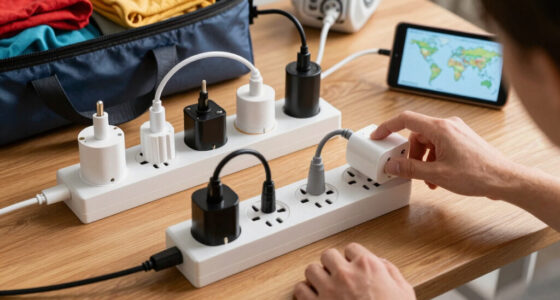
TL;DR

Get travel and outdoor gear delivered free — and shop member deals
- Fast, free delivery on millions of items
- Access to Prime Big Deal Days deals on October 6–7
- Prime Video, Amazon Music and more included
Dual voltage devices work on 110-120V and 220-240V. Always check your device’s label or manual to confirm. Use the right adapters or converters to stay safe and avoid damage when traveling internationally.
Always check your device’s voltage label or manual for a range like 100-240V.
Use a plug adapter for socket differences, but a converter for voltage mismatches.
Most modern USB and phone chargers are dual voltage, reducing packing bulk.
Test your converters and devices at home before your trip to avoid surprises.
Prioritize safety by never plugging a single voltage device into a higher voltage outlet without proper conversion.
What Exactly Are Dual Voltage Devices and Why Do They Matter?
Dual voltage devices are designed to run on both 110-120V and 220-240V power supplies. This means you can use them abroad without risking damage. For example, many modern laptops and phone chargers support 100-240V, making them travel-friendly. But older appliances, like some hairdryers or shavers, often only support a single voltage—either 110V or 220V. Knowing the difference can save you from frying your gadgets or being unable to use them at your destination.
Imagine packing your sleek electric shaver for a trip to Europe, only to find it sparks or stops working. That’s because it’s a single voltage device. The key is to check the label or manual and see if it’s compatible with international voltages. If it is, you’re good to go—just add a plug adapter. If not, you’ll need a voltage converter to step down or up the power safely.
As an affiliate, we earn on qualifying purchases.
How to Quickly Spot if Your Device Supports Dual Voltage
- Look at the power label or brick. It should list voltage range like “100-240V” or “110-240V”.
- Check the user manual or packaging for voltage info.
- Inspect your device’s settings—some have a manual switch to toggle voltage.
For example, a laptop charger that states “Input: 100-240V, 50-60Hz” is dual voltage. This means it can handle most international power supplies without a hitch. If your device only lists 110V or 120V, then it’s single voltage, and you’ll need a converter.
As an affiliate, we earn on qualifying purchases.
Comparison Table: When to Use a Plug Adapter vs. a Voltage Converter
| Use Case | Plug Adapter | Voltage Converter |
|---|---|---|
| Changing plug shapes only | Yes | No |
| Adjusting voltage for single voltage devices | No | Yes |
| For devices supporting 100-240V | Usually unnecessary | Only if plug shape differs |
As an affiliate, we earn on qualifying purchases.
Smart Devices and Power: Are They More Travel-Friendly?
Many new gadgets come with built-in smart voltage detection, making travel simpler. For instance, recent smartphone chargers automatically switch between 100V and 240V, so you only need a plug adapter. According to an anonymous researcher from the World Clock Site, nearly 80% of USB chargers now support dual voltage, reducing the need for bulky converters. This trend means fewer worries when packing — just check your device’s label first.
However, some high-powered appliances still lack this feature, so double-check before you travel. For example, a powerful hairdryer might only support 110V, making a converter essential if you’re heading to Europe.
As an affiliate, we earn on qualifying purchases.
What Happens if You Plug a Single Voltage Device into a Different Voltage? Think Sparks and Smoke
This is not a risk you want to take. Plugging a 110V-only device into a 220V power supply without a converter can cause immediate damage, sparks, or even fire. For example, a travel hairdryer designed for North America might work fine at home but could fry itself in Europe. According to safety guidelines from the World Clock Site, always verify your device’s voltage support before plugging in.
Using a converter or a dual voltage device is like having a universal translator for your electronics. It prevents costly repairs and keeps you safe during your trip.
Step-by-Step: How to Prepare Your Devices for International Travel
- Check each device for a voltage rating (look for 100-240V). If it’s dual voltage, move to step 4.
- If not dual voltage, determine the voltage difference at your destination.
- Choose the right voltage converter (match wattage capacity).
- Get a plug adapter suited to the country’s socket type.
- Test everything at home with the converter and adapter before your trip.
For example, if you’re heading to Japan (100V), and your hairdryer is 110V, a simple plug adapter will do. But if your device is only 220V, you’ll need a step-down converter to avoid frying it.
Frequently Asked Questions
How do I know if my device is dual voltage?
Look at the device’s power label or brick—most list voltage ranges like “100-240V”. If it shows a range, your device can handle different voltages automatically or manually. When in doubt, check the manual or manufacturer’s website for specs.
Do I need a converter or just an adapter?
If your device supports 100-240V, a simple plug adapter is enough to match the socket shape. For devices that only support a single voltage, you’ll need a voltage converter to safely step down or step up power at your destination.
Can I use my hairdryer abroad?
Only if it’s dual voltage or you have a proper voltage converter. Otherwise, plugging it into a different voltage supply risks damaging the device or causing safety hazards like sparks or fires.
What do I do if my device isn’t dual voltage?
Buy a step-down or step-up voltage converter designed for your device’s wattage. Always verify the wattage capacity of your converter to avoid overloads or overheating.
Are USB chargers safe to use internationally?
Most modern USB chargers are dual voltage and only require a plug adapter. Just check the label for “Input: 100-240V” before plugging in abroad.
Conclusion
Think of your electronics as travelers, too — they need the right passport (voltage support) and visa (adapters/converters) to go abroad safely. Taking a few minutes to verify support and pack smart can save you from expensive mishaps or lost time. Remember: a simple label check can prevent sparks and ensure your gadgets keep working wherever you go. Pack smart, travel safe, and enjoy your trip without tech worries.Evergreen bestsellers Picks
bestsellers
As an affiliate, we earn on qualifying purchases.